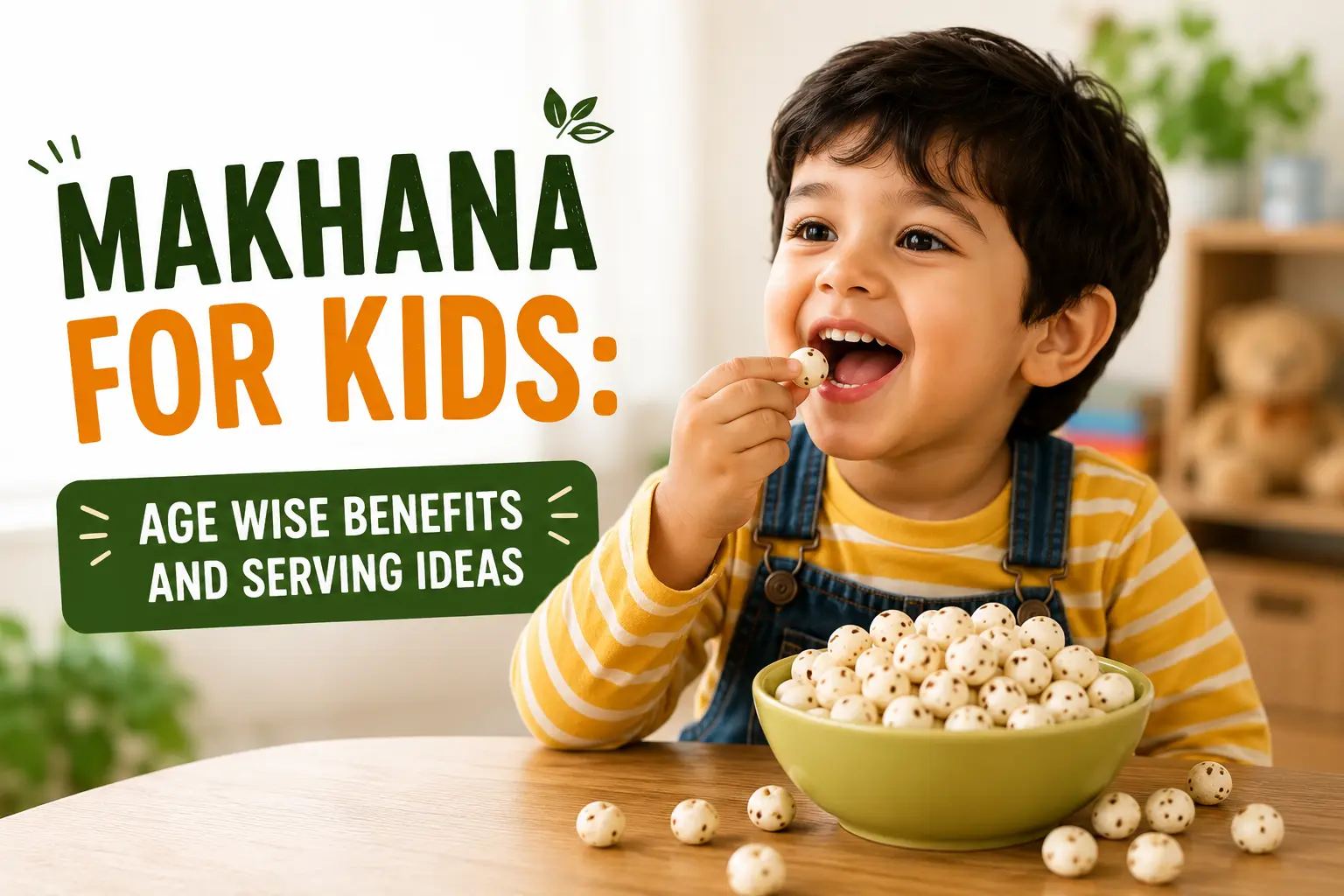
Parents today are becoming far more conscious about what goes into their child’s diet. With increasing exposure to packaged snacks, sugary foods, and deep-fried options, the search for healthier alternatives has become a priority in many households. One snack that is quietly gaining attention in this space is makhana (fox nuts or lotus seeds).
Makhana fits into this category perfectly because it is simple, crunchy, versatile, and can be adapted for different age groups with small changes in preparation, but like any food, the key is understanding how and when to introduce it.
In this guide, we’ll break down makhana benefits for kids by age, safe serving ideas, quantity guidelines, and practical ways to include it in daily meals without overcomplicating things.
Nutritional Value of Makhana for Kids
Before understanding age-wise benefits, it helps to look at what makhana offers nutritionally.
Makhana contains:
- Carbohydrates for energy
- Small amounts of protein
- Calcium for bone development
- Magnesium for muscle and nerve function
- Antioxidants for overall wellness
- Dietary fiber for digestion
While it is not a “complete meal,” it works well as a supportive snack food for growing children.
Age-Wise Benefits of Makhana for Kids
1. Makhana for Toddlers (1–3 Years)
At this stage, children are still developing chewing ability and digestion sensitivity. Introducing makhana should be done carefully.
Benefits:
Makhana can support toddlers because it is light and easy to digest when properly softened or powdered. It can also provide gentle energy without being heavy on the stomach.
Why it works:
- Easy to digest when roasted lightly or crushed
- Helps introduce crunchy textures gradually
- Can be added to milk or porridge
Important note:
Whole roasted makhana should be avoided for very young toddlers unless properly softened, as it may be a choking risk.
Best use: crushed makhana powder in milk or porridge
2. Makhana for Preschool Kids (3–5 Years)
This is the stage where children begin exploring snacks and developing food preferences.
Benefits:
Makhana becomes a great snack replacement for fried foods. It supports energy needs and helps reduce dependency on sugary snacks.
Why it works:
- Encourages healthier snacking habits early
- Provides light energy for active play
- Easier to chew compared to many dry snacks
Best use: lightly roasted makhana with mild seasoning like ghee or salt
3. Makhana for School-Age Kids (5–10 Years)
This is one of the best age groups for introducing makhana regularly.
Benefits:
School-age children need consistent energy, focus, and good digestion. Makhana supports all three in a simple way.
Why it works:
- Helps maintain steady energy during school hours
- Supports better digestion compared to oily snacks
- Can replace chips and packaged snacks in lunchboxes
Best use: roasted makhana as a lunchbox snack or evening snack
4. Makhana for Pre-Teens (10–13 Years)
At this stage, children become more independent in food choices and often prefer packaged snacks.
Benefits:
Makhana helps balance their increasing calorie needs with healthier snacking habits.
Why it works:
- Helps reduce junk food dependency
- Supports growing energy needs
- Can be flavored in healthier ways for taste preference
Best use: flavored makhana (light spices, cheese seasoning, or jaggery coating)
5. Makhana for Teenagers (13+ Years)
Teenagers need more energy due to growth, studies, sports, and lifestyle changes.
Benefits:
Makhana works as a convenient, on-the-go snack that supports energy without heaviness.
Why it works:
- Better alternative to fast food snacks
- Supports focus during study hours
- Fits into fitness and weight-conscious diets
Best use: roasted makhana as evening snack or study-time snack
Health Benefits of Makhana for Kids
1. Supports Healthy Growth
Makhana contains minerals like calcium and magnesium that contribute to bone development and overall growth.
2. Improves Energy Levels
Unlike sugary snacks that give quick spikes, makhana provides steady energy release.
3. Supports Digestion
Its light nature and fiber content make it easier on the digestive system compared to fried foods.
4. Helps Reduce Junk Food Consumption
When introduced early, makhana can gradually replace chips, biscuits, and processed snacks.
5. Better Snacking Habit Formation
Children learn healthier eating patterns when they are given simple and clean snack options regularly.
Read more about: Health Benefits of Makhana
Best Ways to Serve Makhana for Kids
Makhana is one of those snacks that can be prepared in multiple simple ways depending on a child’s age and taste preference. The key is to keep the flavors mild, avoid excess oil, and focus on easy digestion.
1. Roasted Makhana (Basic Healthy Recipe)
This is the most common and beginner-friendly way to prepare makhana for kids.
How to make it:
- Take 1–2 cups of makhana
- Heat a pan on low flame
- Add 1 teaspoon ghee
- Add makhana and roast for 8–10 minutes
- Sprinkle a pinch of mild salt
- Let it cool and serve
This version is light, crunchy, and perfect for daily snacking.
2. Makhana Milk Snack (Comfort Evening Recipe)
This is a soft and filling option, especially good for younger kids.
How to make it:
- Roast makhana lightly or crush it
- Heat 1 cup milk
- Add roasted or crushed makhana into warm milk
- Simmer for 2–3 minutes
- You can add a small pinch of cardamom for flavor (optional)
This works well as an evening or bedtime snack.
3. Sweet Makhana Treat (Healthy Candy Alternative)
A simple way to satisfy sweet cravings without processed sugar.
How to make it:
- Dry roast makhana in a pan
- In another pan, melt 1–2 teaspoons jaggery with a few drops of water
- Mix roasted makhana into the melted jaggery
- Stir quickly until evenly coated
- Let it cool before serving
This makes a crunchy, mildly sweet snack that kids usually enjoy.
4. Makhana Mix (Nutri Snack Bowl)
Best for older kids who need more energy during school or playtime.
How to make it:
- Roast 1 cup makhana
- Add chopped almonds, cashews, and a few raisins
- Mix everything in a bowl
- Add a pinch of salt or light seasoning if needed
This creates a balanced snack with crunch, sweetness, and nutrition.
5. Flavored Makhana (Teen-Friendly Snack)
For teenagers who prefer bold flavors, makhana can be lightly seasoned.
How to make it:
- Roast makhana in 1 teaspoon oil or ghee
- Add mild seasoning like cheese powder, chaat masala, or light masala mix
- Toss well while still warm
- Let it cool before storing
This version works well as a replacement for chips or packaged snacks.
How Much Makhana Should Kids Eat?
Moderation is important.
- Toddlers: small crushed portions occasionally
- 3–5 years kids: small handful per day
- 5–10 years kids: 1 small bowl
- Teenagers: 1–2 bowls depending on activity level
Avoid overfeeding as it is still a snack, not a meal replacement.
Read about: How much makhana you should eat daily
Things Parents Should Keep in Mind While Serving Makhana to Kids
- Always ensure proper roasting for better digestion
- Avoid excessive salt or artificial flavors
- Introduce slowly, not all at once
- Watch for chewing ability in younger kids
- Balance with fruits, vegetables, and meals
Conclusion
Makhana is a simple, light, and flexible snack that can easily fit into a child’s daily diet when prepared in the right way. From toddlers to teenagers, it can be adjusted in texture and flavor to match different age needs. The key is consistency and balance—using makhana as a smart snack option while still maintaining a varied and nutritious diet for children. Brands like Hybite Foods are helping make quality makhana more accessible, making it easier for parents to choose healthier snack options for their families.
Shop Our Healthy Flavored Makhana
FAQs
1. Is makhana safe for kids to eat daily?
Yes, makhana is safe in moderate amounts and can be included as a regular snack.
2. From what age can children eat makhana?
It can be introduced in crushed or soft form from around 1–2 years, depending on chewing ability.
3. Is roasted makhana better than fried snacks for kids?
Yes, roasted makhana is much lighter and healthier compared to fried snacks.
4. Can makhana be given to toddlers?
Yes, but it should be crushed or softened to avoid choking risk.
5. Does makhana help in child growth?
It provides minerals like calcium and magnesium that support growth and development.