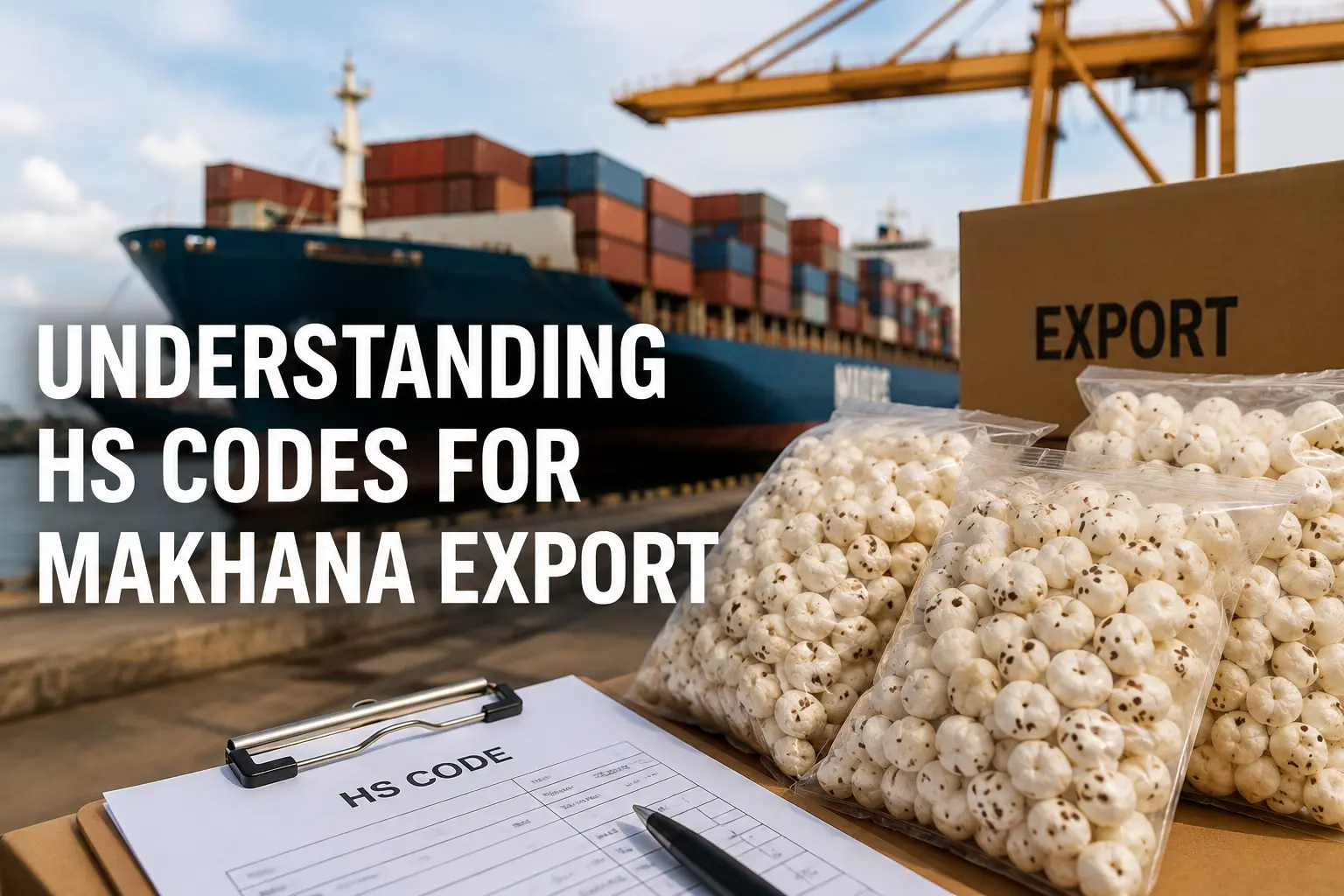
If you are planning to export makhana internationally, one of the first things you need to understand is the HS Code. An HS Code, or Harmonized System Code, is an internationally recognized classification system used by customs authorities to identify products during import and export.
For makhana exporters, using the correct HS Code is essential because it affects customs clearance, documentation, tariff calculations, shipping procedures, and regulatory compliance. A mistake in product classification can result in shipment delays, additional inspections, penalties, or unexpected costs. If you are exporting raw makhana, roasted makhana, flavored makhana, or private-label products, understanding HS Codes helps ensure smoother international trade operations.
Why HS Codes Matter in the Makhana Export Business
Many new exporters focus on sourcing, packaging, and finding buyers but overlook the importance of product classification. However, customs authorities around the world rely on HS Codes to determine how a product should be treated during international trade.
A correct HS Code helps with:
- Customs clearance
- Duty and tax calculations
- Export documentation
- Product identification
- Trade compliance
- International shipping procedures
Without proper classification, even a high-quality shipment can face avoidable complications.
How HS Codes Are Structured
HS Codes follow a standardized numerical structure that helps customs authorities classify products consistently across international markets. Each set of digits provides more specific information about the product, making it easier for governments, importers, exporters, and logistics providers to identify goods accurately during the trade process.
The Harmonized System uses a hierarchical format, meaning the classification becomes more detailed as additional digits are added. While the first six digits are generally recognized worldwide, many countries extend the code further to create more specific product categories based on their own customs requirements.
Typically, the structure includes:
Level | Purpose |
First 2 Digits | Identify the broad product chapter or industry category |
First 4 Digits | Define a more specific product group within that category |
First 6 Digits | Represent the internationally recognized HS classification |
Additional Digits | Used by individual countries for detailed national classifications |
This structured system helps ensure that products are identified uniformly across global trade networks while still allowing individual countries to apply their own customs, taxation, and regulatory requirements where needed. For exporters, understanding this structure can make it easier to manage documentation, communicate with buyers, and navigate international shipping procedures more effectively.
Which HS Code Is Used for Makhana?
The exact HS Code used for makhana can vary depending on:
- Product form
- Processing level
- Country-specific customs classification
- Product ingredients
- Packaging format
For example, classification may differ between:
- Raw makhana
- Roasted makhana
- Flavored makhana
- Packaged retail products
- Bulk export products
So, the custom regulations can change, exporters should always verify the latest classification with customs authorities, trade consultants, or logistics professionals before shipping.
How HS Codes Affect Import Duties
One of the most important functions of an HS Code is its role in determining the duties and taxes applied to imported products. Customs authorities around the world use product classification codes to identify goods and calculate the charges that importers must pay before the shipment can enter the country.
So, the duty rates can vary significantly between product categories, selecting the correct HS Code is essential. Even a small classification error can result in incorrect tax calculations, customs disputes, shipment delays, or additional costs for the importer.
The HS Code may influence several aspects of the import process, including:
- Applicable customs duties
- Import taxes and fees
- Trade restrictions or special regulations
- Inspection and clearance requirements
- Documentation and compliance obligations
- Eligibility under trade agreements, where applicable
For this reason, international buyers often request HS Code information before placing bulk orders. It helps them estimate the total landed cost of the product, understand local import requirements, and avoid unexpected expenses once the shipment reaches its destination.
Also Read About: Makhana Import Regulations by Country
Documents That Commonly Require HS Codes
HS Codes appear on multiple export documents throughout the shipping process.
Common examples include:
1. Commercial Invoice
The commercial invoice is one of the most important export documents and is used by customs authorities to determine the value and nature of the goods being shipped. Including the correct HS Code helps customs officials identify the product accurately and apply the appropriate duties, taxes, and import regulations.
2. Packing List
A packing list provides detailed information about the contents of a shipment, including product descriptions, quantities, weights, and packaging details. HS Codes are often included to help customs officers, freight forwarders, and logistics providers verify that the goods match the accompanying documentation.
3. Shipping Documents
Many shipping and freight-related documents require accurate product classification information. Using the correct HS Code helps carriers and logistics companies process shipments efficiently and reduces the risk of documentation discrepancies during transportation.
4. Customs Declarations
Customs declarations are submitted to government authorities when goods are imported or exported. These declarations rely heavily on HS Codes because customs departments use them to identify product categories, assess duties and taxes, and determine whether additional inspections or regulatory requirements apply.
Maintaining consistency in HS Codes across all export documents helps create a smoother shipping process and reduces the likelihood of customs-related issues.
How Buyers Use HS Codes
HS Codes are not only important for exporters—they are equally valuable for importers when evaluating products from international suppliers. Before placing an order, buyers often review the HS Code to understand the potential costs, regulatory requirements, and import procedures associated with the product.
Accurate product classification helps importers plan their purchases more effectively and avoid unexpected issues after the shipment arrives. It also allows them to estimate the total cost of importing the product into their country and ensure that all compliance requirements are met.
Importers commonly use HS Codes to determine:
- Estimated import duties and taxes
- Applicable customs regulations
- Product-specific restrictions or approvals
- Compliance and documentation requirements
- Overall landed cost of the shipment
- Inspection or certification requirements, if applicable
For exporters, providing the correct HS Code demonstrates professionalism and transparency. It helps buyers make informed purchasing decisions, reduces confusion during the import process, and builds greater confidence in long-term business relationships.
Conclusion
HS Codes may seem like a small detail, but they play a major role in successful makhana exports. From customs clearance and duty calculations to documentation accuracy and international compliance, proper product classification helps ensure smoother and more efficient trade operations.
As global demand for makhana continues to grow, exporters who understand HS Codes and maintain accurate documentation will be better positioned to serve international buyers and expand into new markets. For businesses looking to source export-quality makhana, Hybite Foods supports wholesalers, distributors, importers, and private-label brands with reliable bulk supply solutions, consistent product quality, and export-ready packaging to meet the requirements of international markets.
You Can Also Read More About: Certifications Required for Exporting Makhana
Frequently Asked Questions
1. What is an HS Code in export business?
An HS Code is an internationally recognized product classification number used for customs and international trade purposes.
2. Why is HS Code important for makhana exports?
It helps determine customs requirements, duties, taxes, documentation, and compliance obligations.
3. What happens if the wrong HS Code is used?
Incorrect classification can result in customs delays, inspections, penalties, or additional costs.
4. Do all countries use HS Codes?
Most countries use the Harmonized System framework, although additional country-specific classifications may apply.
5. How do HS Codes affect import duties?
Governments use HS Codes to determine applicable duties, taxes, and trade regulations.