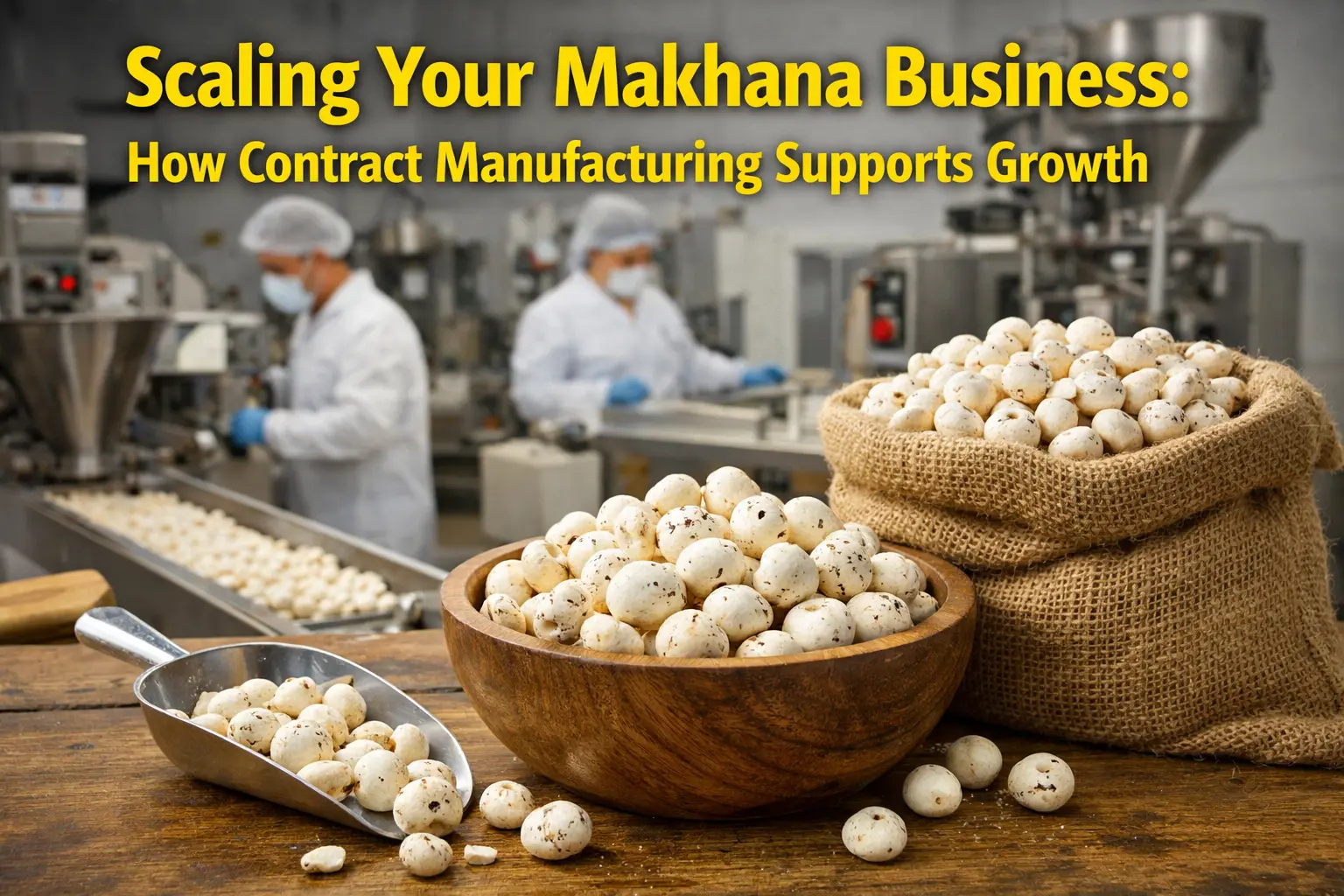
The makhana industry in India is no longer limited to traditional markets. What was once a niche product is now a fast-growing category in the global healthy snack segment. From roasted snacks to flavored variants, the demand for makhana is rising across domestic and export markets.
For brands, distributors, and entrepreneurs, this growth brings opportunity—but also a challenge: how do you scale your makhana business without investing heavily in infrastructure, machinery, and operations? This is where contract manufacturing in makhana becomes a practical and powerful solution.
In this guide, we’ll break down how contract manufacturing works, why it’s becoming the backbone of scaling makhana businesses, and how you can use it to grow faster with less risk.
Why the Makhana Business Is Growing Rapidly
Before diving into scaling strategies, it’s important to understand why the makhana business in India is gaining momentum.
- Increasing demand for healthy snack alternatives
- Growing awareness of low-calorie, high-protein foods
- Expansion of makhana export markets (USA, UAE, Europe)
- Rising popularity of flavored and branded makhana products
For many businesses, this creates a clear opportunity to build a profitable makhana business—but scaling it requires the right approach.
The Real Challenge: Scaling Without Heavy Investment
Starting a makhana business is relatively simple—but scaling it is where most businesses struggle.
Common challenges include:
- High investment in roasting and processing machines
- Difficulty in maintaining consistent quality across batches
- Managing sourcing from regions like Bihar
- Handling packaging, branding, and logistics
- Meeting export standards and certifications
This is why many growing brands are shifting towards contract manufacturing of makhana instead of setting up their own production units.
What Is Contract Manufacturing in Makhana?
Contract manufacturing means partnering with an experienced manufacturer who handles production on your behalf.
Instead of building your own factory, you outsource:
- Roasting and processing
- Flavor development
- Grading and sorting
- Packaging and labeling
- Quality control
This model is widely used in the food industry and is now becoming a key growth driver in the makhana private label business.
How Contract Manufacturing Helps Scale Your Makhana Business
1. Faster Market Entry
Launching a makhana brand from scratch can take months if you’re setting up production. With contract manufacturing, you can go to market much faster since the infrastructure is already in place.
This is especially useful if you want to:
- Test new product ideas
- Launch seasonal or trending flavors
- Enter new markets quickly
2. Lower Investment, Higher Flexibility
One of the biggest challenge in scaling a makhana business is the high upfront investment required for setting up your own processing unit. From machinery to manpower, the costs can quickly add up. Contract manufacturing removes this burden and gives you the flexibility to grow without locking your capital into infrastructure.
You don’t need to invest in:
- Machinery: No need to purchase roasting, grading, or packaging equipment
- Factory setup: Avoid costs related to space, utilities, and maintenance
- Skilled labor: No need to hire and manage trained workers for production
Instead, you can focus your budget on:
- Branding: Build a strong identity and packaging that stands out
- Marketing: Invest in digital marketing, distribution channels, and sales
- Expansion: Scale faster by entering new markets without operational limits
This approach makes it much easier to build a scalable and flexible makhana business, where your resources are focused on growth rather than operations.
3. Consistent Quality and Grading
Maintaining consistent quality is one of the biggest challenges in bulk makhana supply, especially when scaling operations. This is where experienced contract manufacturers bring real value. With established sourcing networks—particularly from key regions like Bihar—along with standardized Suta-based grading systems and strict quality control at every stage.
They ensure that every batch meets defined standards:
- Strong sourcing networks ensure reliable raw material quality
- Standardized Suta grading maintains size and uniformity
- End-to-end quality checks reduce defects and inconsistencies
- Consistent batches improve shelf life and product performance
- Fewer quality issues lead to lower complaints and returns
This level of consistency is critical for building a reliable brand and maintaining long-term customer trust.
4. Access to Product Development & Innovation
The makhana market has evolved beyond plain roasted snacks. Today’s consumers are actively looking for new flavors, better nutrition profiles, and unique snack experiences. Contract manufacturers help brands stay ahead by offering product development support and insights into what’s trending in the market. This makes it easier to launch products that are not just different—but actually in demand.
What’s Driving Demand
- Peri-peri and spicy flavored makhana
- Cheese and savory variants
- Chocolate-coated and sweet options
- Diet-focused and fitness-friendly blends
How Contract Manufacturers Support Innovation
- Recipe development based on market demand
- Flavor experimentation and customization
- Insights into trending products and consumer preferences
This support allows brands to innovate faster and stay competitive in a crowded market.
5. Easy Private Label Expansion
If your goal is to build your own brand, contract manufacturing makes the process much simpler and faster. Instead of worrying about production, you can focus on creating a strong brand presence and expanding your product line.
What You Can Do
- Customize packaging according to your brand identity
- Build a unique positioning in the market
- Launch multiple SKUs without operational complexity
Private labeling is one of the most effective ways to scale quickly and enter retail stores, eCommerce platforms, and even export markets with your own branded makhana products.
6. Smooth Export Operations
Expanding into international markets comes with its own challenges, especially when it comes to compliance and logistics. Contract manufacturers with export experience simplify this process by handling critical requirements and ensuring your product meets global standards.
Export Support Includes
- Compliance with food safety standards like FSSAI, ISO, and HACCP
- Handling export documentation and approvals
- Packaging as per international guidelines
- Managing bulk shipments efficiently
This reduces delays, minimizes risks, and helps ensure that your makhana products reach global markets
When Should You Consider Contract Manufacturing?
Contract manufacturing is not limited to large-scale businesses—it’s a practical solution at different stages of growth. If you’re just starting out or looking to scale, it helps reduce risk and improve efficiency without heavy investment.
You should consider it if:
- You want to start a makhana business in India without setting up a factory
- You’re planning to launch a new snack or makhana brand
- Your current production is unable to meet increasing demand
- You want to expand into makhana export markets
- You’re looking to test new products or flavors with minimal risk
This approach gives you the flexibility to grow at your own pace while focusing on branding, sales, and market expansion.
Choosing the Right Contract Manufacturer
When it comes to scaling a makhana business, working with the right partner—like Hybite Foods—can make a significant difference. Not all manufacturers offer the same level of quality, consistency, and support. The right contract manufacturer doesn’t just produce your product—they help you grow your business.
Here’s what you should check before finalizing a contract manufacturing partner:
1. Experience in Makhana Processing
Look for manufacturers who understand the complete process—from sourcing raw seeds to final grading and packaging. Experienced partners are more likely to deliver consistent quality across bulk orders.
2. Strong Sourcing Network
Direct access to regions like Bihar ensures better raw material quality and stable supply. A strong sourcing network is essential for maintaining consistency in large-scale production.
3. Customization Capabilities
Your manufacturer should support flexibility based on your business needs.
- Flavor development and product innovation
- Private labeling for brand building
- Flexible packaging options for different markets
4. Quality Control Systems
Reliable manufacturers follow strict quality checks at every stage.
- Standardized grading systems (Suta-based)
- Proper moisture control for longer shelf life
- Inspection processes to reduce defects
5. Scalability
As your business grows, your manufacturing partner should be able to scale production without compromising quality or timelines.
The Future of the Makhana Business
The future of the makhana industry in India looks strong, especially with:
- Rising global demand for healthy snacks
- Government focus on agricultural exports
- Growth of private label brands
- Expansion of online food marketplaces
Businesses that adapt early—especially by leveraging contract manufacturing of makhana—will have a clear advantage.
Conclusion
Scaling a makhana business today is less about building infrastructure and more about making smart, strategic decisions. With rising demand in both domestic and international markets, the opportunity is strong—but only for those who can maintain quality, consistency, and speed. Contract manufacturing makes this possible. It allows you to reduce investment risk, access expert production, and focus on what truly drives growth—branding, distribution, and market expansion. Instead of managing operations, you can concentrate on building a business that scales efficiently.
Partnering with an experienced manufacturer can further strengthens this process by ensuring reliable sourcing, consistent quality, and production support at every stage.
FAQs
1. What is contract manufacturing in the makhana business?
It is a process where a third-party manufacturer handles production, processing, and packaging of makhana products for your brand.
2. Is the makhana business profitable in India?
Yes, with rising demand for healthy snacks and export opportunities, the makhana business offers strong profit potential when managed efficiently.
3. Can I start a makhana brand without a factory?
Yes, through contract manufacturing and private labeling, you can launch a makhana brand without owning production infrastructure.
4. What are the benefits of private label makhana?Private labeling allows you to build your own brand, customize packaging, and scale quickly without manufacturing investment.
5. How do I choose the right makhana manufacturer?
Look for experience, sourcing strength, quality control, customization options, and the ability to handle bulk orders efficiently.