
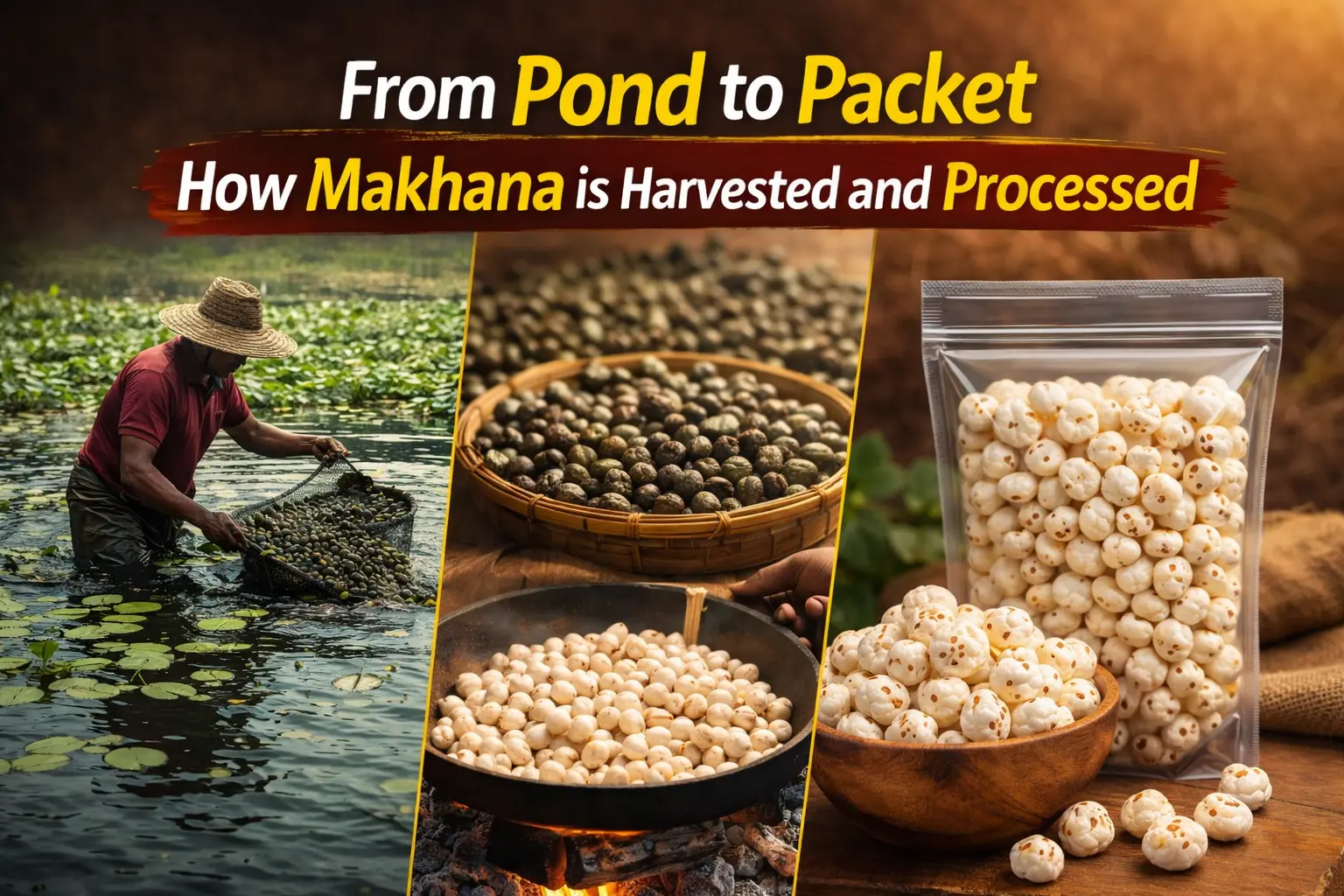
There's something almost meditative about the way makhana has been harvested for generations — farmers wading through still ponds at dawn, gathering lotus seeds by hand, just as their ancestors did. Also called fox nuts, this humble crop has quietly become one of India's most treasured agricultural products, finding its way from rural wetlands to health food shelves across the world.
What makes makhana special isn't just its light, satisfying crunch or impressive nutritional profile — it's the remarkable journey behind every popped seed. Growing naturally in ponds and wetlands, it requires a kind of patience that modern agriculture rarely demands, transforming small raw seeds into the airy white puffs that snack lovers and home cooks rely on.
For wholesale buyers, food brands, and importers, that journey matters. Knowing how makhana moves from water to warehouse makes all the difference when choosing suppliers you can truly trust. In this blog, we're pulling back the curtain on the full story — from the quiet ponds of Bihar to bulk-ready packaging — so you know exactly what goes into the makhana you source.
Makhana Production in India
India plays a leading role in the global makhana industry. The crop grows naturally in freshwater ponds and wetlands where the lotus plant thrives. The majority of makhana farming takes place in regions where water bodies support lotus cultivation. These areas have the ideal environment for growing high-quality fox nuts.
Key characteristics of makhana farming include:
- Cultivation in natural ponds and wetlands
- Manual harvesting of seeds
- Traditional processing techniques
- Skilled labor required for popping and grading
Because of this specialized process, makhana has become a valuable product for every bulk makhana supplier and food manufacturer operating in both domestic and international markets.
Step-by-Step Processing of Makhana
The processing of makhana involves several stages that convert raw lotus seeds into edible fox nuts. Each step requires careful handling to maintain quality and texture.
Below is the complete journey of makhana production.
1. Harvesting the Seeds from Ponds
The first stage begins with harvesting the seeds from ponds where makhana plants grow. The seeds develop inside thorny fruits that sink to the bottom of the water. Skilled farmers enter the ponds to collect these fruits manually.
Harvesting usually involves:
- Entering the water using small boats or by wading
- Collecting mature fruits from the pond floor
- Separating seeds from the fruit
This step requires experience and physical effort because the seeds are collected from muddy pond beds. Harvesting is usually done during the daytime when visibility and water conditions are suitable.
2. Cleaning and Washing the Seeds
After harvesting, makhana seeds (fox nuts) are usually covered with mud and plant residues. To begin the processing, the seeds are thoroughly cleaned to remove dirt and impurities. .
This stage includes:
- Washing seeds with clean water
- Removing dirt and unwanted particles
- Sorting out damaged seeds
Cleaning ensures that only high-quality seeds move forward in the processing cycle.
3. Drying the Seeds
Once cleaned, the seeds must be dried before they can be roasted. Farmers spread the seeds under sunlight to reduce moisture content. Proper drying is important because excess moisture can affect roasting and popping.
Drying helps to:
- Prepare seeds for roasting
- Improve shelf stability
- Maintain seed quality
Depending on weather conditions, this step may take several hours or an entire day.
4. Roasting the Seeds
After drying, the seeds are roasted in large iron pans. Roasting is one of the most important steps in the processing of makhana because it prepares the seed for the popping stage.
During roasting:
- Seeds are heated at controlled temperatures
- Workers continuously stir the seeds
- The outer shell becomes slightly brittle
This process must be done carefully because excessive heat can damage the seeds.
5. Popping the Makhana
Once roasted, the seeds are ready for the popping stage. This is the process that turns hard seeds into the white puffed makhana kernels commonly sold in the market.
Workers place the roasted makhana seeds (fox nuts) on a flat surface and gently apply controlled pressure using special tools or wooden hammers. The heat trapped inside the seed causes it to pop open, forming the light and crunchy fox nuts snack that people commonly enjoy.
6. Grading and Sorting
After popping, the makhana kernels are sorted and graded based on size and quality. Grading is an important step, especially for bulk buyers and exporters, because different markets prefer different sizes.
Makhana is generally classified into:
- Large size premium makhana
- Medium grade makhana
- Small size makhana
Premium grades are usually preferred by every makhana exporter from India and high-end snack brands targeting international markets.
7. Quality Inspection
Before the product moves to packaging, it undergoes quality inspection. Suppliers check several factors to ensure consistent product standards.
Quality inspection includes:
- Checking Makhana size and color
- Removing broken pieces
- Monitoring moisture levels
- Ensuring hygienic processing
This stage helps ensure that the makhana meets food safety and export standards set by every responsible makhana manufacturer in India
8. Packaging for Bulk Supply
The final stage in the journey from pond to packet is packaging. Once the makhana is processed and graded, it is packed in hygienic conditions to maintain freshness and shelf life.
Suppliers typically offer:
- Bulk packaging for wholesalers
- Export packaging for international buyers
- Custom packaging for food brands
Proper packaging helps protect the product during storage and transportation.
Conclusion
The journey of makhana from pond to packet reflects a unique combination of traditional farming knowledge and careful processing methods. Starting with seed harvesting in natural ponds and continuing through cleaning, drying, roasting, popping, grading, and packaging, every stage contributes to the final high-quality product.
For wholesale buyers, distributors, and food manufacturers, understanding the processing of makhana helps ensure better sourcing decisions and consistent product quality and also the demand for natural and healthy snack ingredients, makhana continues to be an important product supplied by Indian producers to both domestic markets and international buyers.
Faq’s
1. How is makhana harvested from ponds?
Makhana harvesting is a traditional process where farmers collect the mature seeds from the bottom of ponds or shallow water bodies. The seeds are separated from the fruit and gathered for further cleaning and processing.
2. What is the processing of makhana?
The processing of makhana involves several stages including seed harvesting, cleaning, drying, roasting, popping, grading, and packaging. Each step helps transform raw lotus seeds into the edible white makhana that is sold in markets.
3. Why is makhana processing considered as labor-intensive?
Makhana processing requires skilled workers because many steps are still done manually. Harvesting seeds from ponds, roasting them at controlled temperatures, and popping the seeds into edible kernels require experience and careful handling.
4. Is makhana suitable for bulk supply and export?
Yes, makhana is commonly supplied in bulk to wholesalers, food brands, distributors, and snack manufacturers. Its long shelf life and growing demand make it a popular product for both domestic supply and international export.
5. How is makhana graded after processing?
After the popping stage, makhana is sorted and graded based on size, color, and quality. Larger and uniform kernels are usually considered premium grade and are often preferred by exporters and food brands.
6. How is makhana packaged for bulk buyers?
For wholesale and export purposes, makhana is packed in large food-grade packaging that helps maintain freshness and protects the product during storage and transportation.