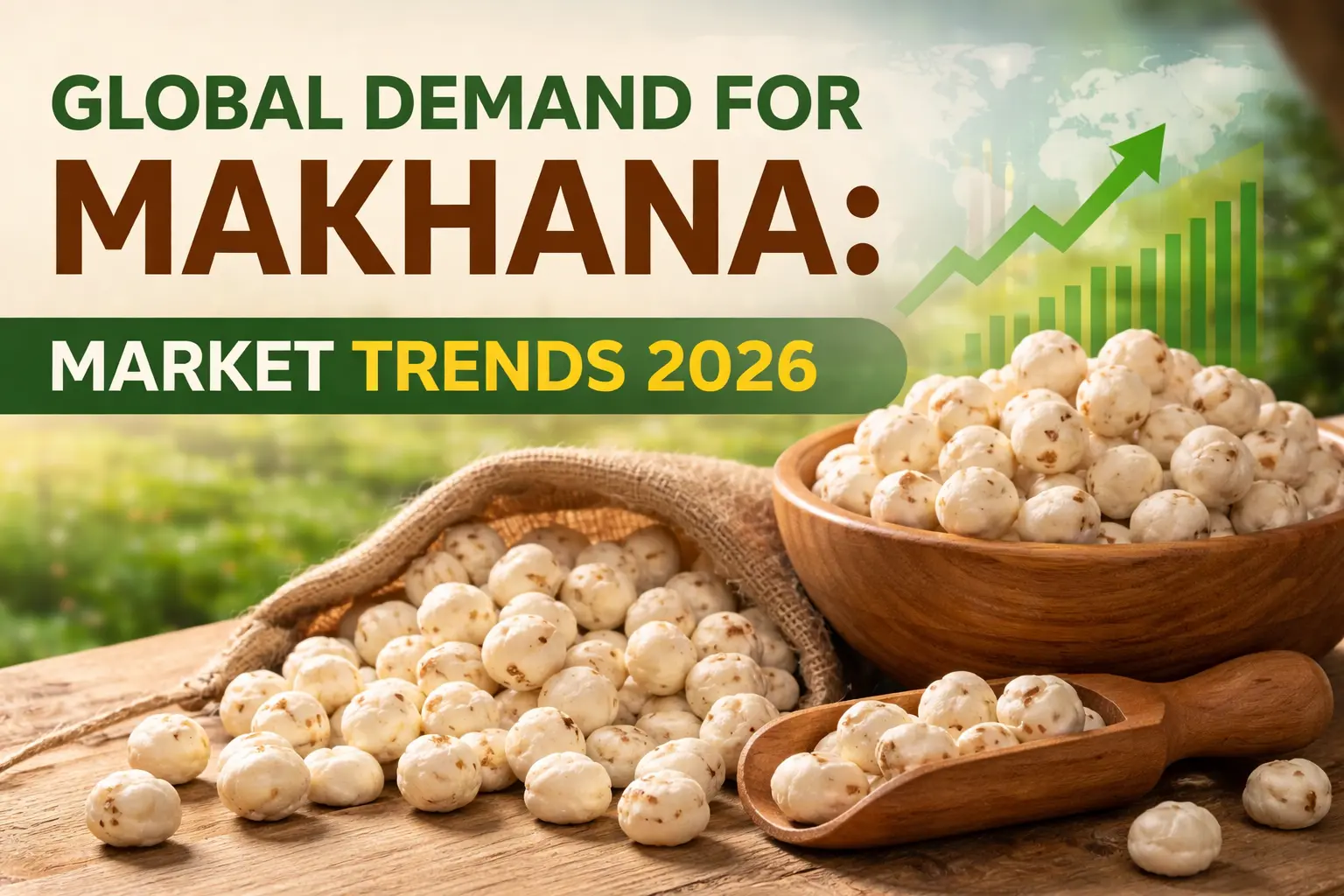
Over the past few years, makhana has moved far beyond being a traditional Indian snack. What was once limited to local consumption is now gaining serious traction in global markets.
In 2026, the global demand for makhana is no longer a niche trend. It has become a fast-growing category within the healthy snacking industry. For exporters, wholesalers, and B2B buyers, this shift presents a strong opportunity — but only for those who understand how the market is evolving.
This guide breaks down the makhana market trends in 2026, key demand, export opportunities, and what buyers should focus on when sourcing at scale.
Understanding the Global Makhana Market
Makhana is derived from the seeds of the aquatic plant Euryale ferox. India dominates global production, supplying the majority of makhana to both domestic and international markets what’s changing in 2026 is not production — it’s positioning.
Makhana is now being marketed globally as:
- A healthy snack alternative to chips and popcorn
- A plant-based, gluten-free food
- A low-calorie, high-fiber snack
This repositioning has significantly increased its demand in health-conscious markets.
What’s Driving the Global Demand for Makhana
1. Rising Demand for Healthy Snacks
The global snack industry is shifting rapidly. Consumers are moving away from fried and processed foods and looking for clean-label, low-calorie options.
Makhana fits perfectly into this trend because it is:
- Light and easy to digest
- Low in fat
- Free from artificial additives (in its natural form)
This has made makhana a preferred choice in the healthy snacking category, especially in urban markets.
2. Growth of Plant-Based and Vegan Diets
One of the strongest reasons behind the rising demand for makhana is the global shift towards plant-based eating. Most consumers are now choosing foods that are natural, minimally processed, and aligned with vegan lifestyles. This shift is especially visible in urban and international markets where clean eating has become a priority.
Why makhana fits plant-based diets:
- 100% plant-based
- Naturally gluten-free
- Suitable for vegan diets
As more people adopt vegan and clean eating habits, makhana continues to gain popularity across global markets.
3. Expansion of the Makhana Export Market
India continues to dominate the global makhana industry, both in production and exports. Over the last few years, the makhana export market has seen steady growth, driven by increasing international demand. Countries like the United States, United Kingdom, Australia, UAE, and Canada are importing more makhana as consumers in these regions look for healthier snack alternatives.
Key export markets include:
- United States
- United Kingdom
- Australia
- UAE
- Canada
As the market expands, buyers are not just looking for quantity but also consistent quality, better packaging, and proper compliance. This means exporters need to focus more on standards and reliability.
4. Increasing Awareness of Makhana Benefits
Another important factor behind the growth of the makhana market is increasing consumer awareness. Today’s buyers are more informed and actively look for foods that offer health benefits along with convenience. With the rise of health blogs, social media, and nutrition-focused content, makhana is now widely recognized as a healthy snack option.
Popular benefits driving demand:
- Supports weight management
- Helps in digestion
- Provides essential minerals
- Acts as a healthier alternative to fried snacks
As awareness continues to grow, more consumers are adding makhana to their daily diet, which is further boosting its global demand.
Makhana Market Trends 2026
To succeed in the makhana business in 2026, it’s important to understand how the market is evolving. Buyer expectations have changed, and the industry is becoming more organized, competitive, and quality-focused. Businesses that adapt to these trends are the ones that will grow faster in both domestic and international markets.
1. Shift Toward Branded and Packaged Makhana
Earlier, makhana was commonly sold loose in local markets without much focus on branding or packaging. Today, the market has shifted towards branded, well-packaged products, especially for retail and export. Buyers now expect products that are clean, properly packed, and ready for shelves. Packaging is no longer just about protection — it also plays a role in branding and customer trust.
What buyers are looking for:
- Branded packaging
- Hygienically processed products
- Export-ready packaging formats
Suppliers who can maintain consistent quality along with professional packaging are more likely to succeed.
2. Demand for Flavored Makhana
The plain makhana still has steady demand but flavored variants are growing rapidly, especially in international markets. Consumers today look for snacks that are both healthy and tasty. Flavored makhana adds variety and improves the overall snacking experience, making it more appealing for retail shelves.
Popular flavors in demand:
For B2B buyers, flavored makhana offers better product positioning and higher profit margins compared to plain variants.
3. Bulk Buying and Private Label Growth
One major shift in the market is the rise of private label brands. Many retailers and distributors are now sourcing makhana in bulk and selling it under their own brand names. This has created strong demand for suppliers who can handle large volumes and offer customization.
Growing demand for:
- Bulk makhana suppliers in India
- Private label manufacturing
- Custom packaging solutions
Suppliers who provide flexible branding options and scalable supply are gaining a clear competitive advantage.
4. Focus on Quality and Traceability
As the market expands, buyers are becoming more selective about quality and sourcing. They are no longer just looking for low prices — they want consistency and transparency. Maintaining proper standards across batches has become essential, especially for exports.
What buyers expect:
- Consistent size and grading
- Clean and hygienic processing
- Transparent sourcing
Traceability in the makhana supply chain is now a key factor in building long-term trust with international buyers.
5. Growth in E-commerce and Online Sales
E-commerce has played a big role in making makhana accessible to a global audience. Consumers can now easily explore and purchase different varieties of makhana online. This has increased visibility for brands and created new sales channels beyond traditional retail.
What’s driving online growth:
- Easy access to premium makhana brands
- Wide range of flavored options
- Availability of bulk buying
The competition has increased, online platforms have also opened new opportunities for exporters and suppliers to reach a larger audience.
Opportunities for B2B Buyers and Exporters
The rising global demand for makhana in 2026 is creating strong opportunities for businesses involved in sourcing, distribution, and exports.
1. Expanding Product Portfolio
Adding makhana to your product range is a smart move, especially if you are already dealing in food or snack categories. It allows you to tap into the fast-growing healthy snacking segment, which is seeing consistent demand across both domestic and international markets.
2. Entering New Markets
With increasing awareness about makhana, demand is no longer limited to India. New regions are opening up, giving exporters a chance to expand their reach and build global partnerships. This is the right time to explore untapped markets and scale your business.
3. Higher Profit Margins
Compared to many traditional snack products, makhana offers better margins — especially in branded and flavored categories. With the right packaging and positioning, businesses can create premium products that generate higher returns.
Challenges in the Global Makhana Market
The market offers strong growth potential but there are still a few challenges that businesses need to manage carefully to succeed in the long run.
1. Inconsistent Quality
One of the biggest issues is variation in quality across suppliers. Differences in size, texture, and processing can make it difficult for buyers to maintain consistency, especially in bulk orders.
2. Lack of Standardization
The industry still lacks uniform standards for grading, processing, and packaging. This can create confusion for buyers and affect product reliability in different markets.
3. Supply Chain Gaps
The makhana supply chain often involves multiple intermediaries, which can impact pricing, transparency, and efficiency. This makes it harder to track product origin and maintain control over quality.
Addressing these challenges by choosing reliable suppliers and focusing on quality control is essential for long-term success in the makhana business.
Final Thoughts
The global demand for makhana in 2026 is driven by a clear shift toward healthier, cleaner, and plant-based snacking options. For B2B buyers, this is the right time to enter or expand in the makhana market. However, success depends on choosing the right suppliers, maintaining quality standards, and understanding evolving market trends. Businesses that adapt to these changes will not only benefit from rising demand but also build long-term value in one of the fastest-growing snack categories worldwide.
FAQs
1. Why is makhana becoming popular worldwide?
Makhana is gaining popularity because it is low in calories, gluten-free, plant-based, and considered a healthier alternative to fried snacks.
2. Which countries import makhana the most?
Major importers of makhana include the United States, United Kingdom, Australia, UAE, and Canada.
3. What are the current makhana market trends?
Key trends include demand for flavored makhana, branded packaging, private label products, and increased online sales.
4. What should buyers check before sourcing makhana?
Buyers should check product quality, grading, processing standards, certifications, and supplier reliability.
5. What challenges exist in the makhana market?
Common challenges include inconsistent quality, lack of standardization, and supply chain inefficiencies.