
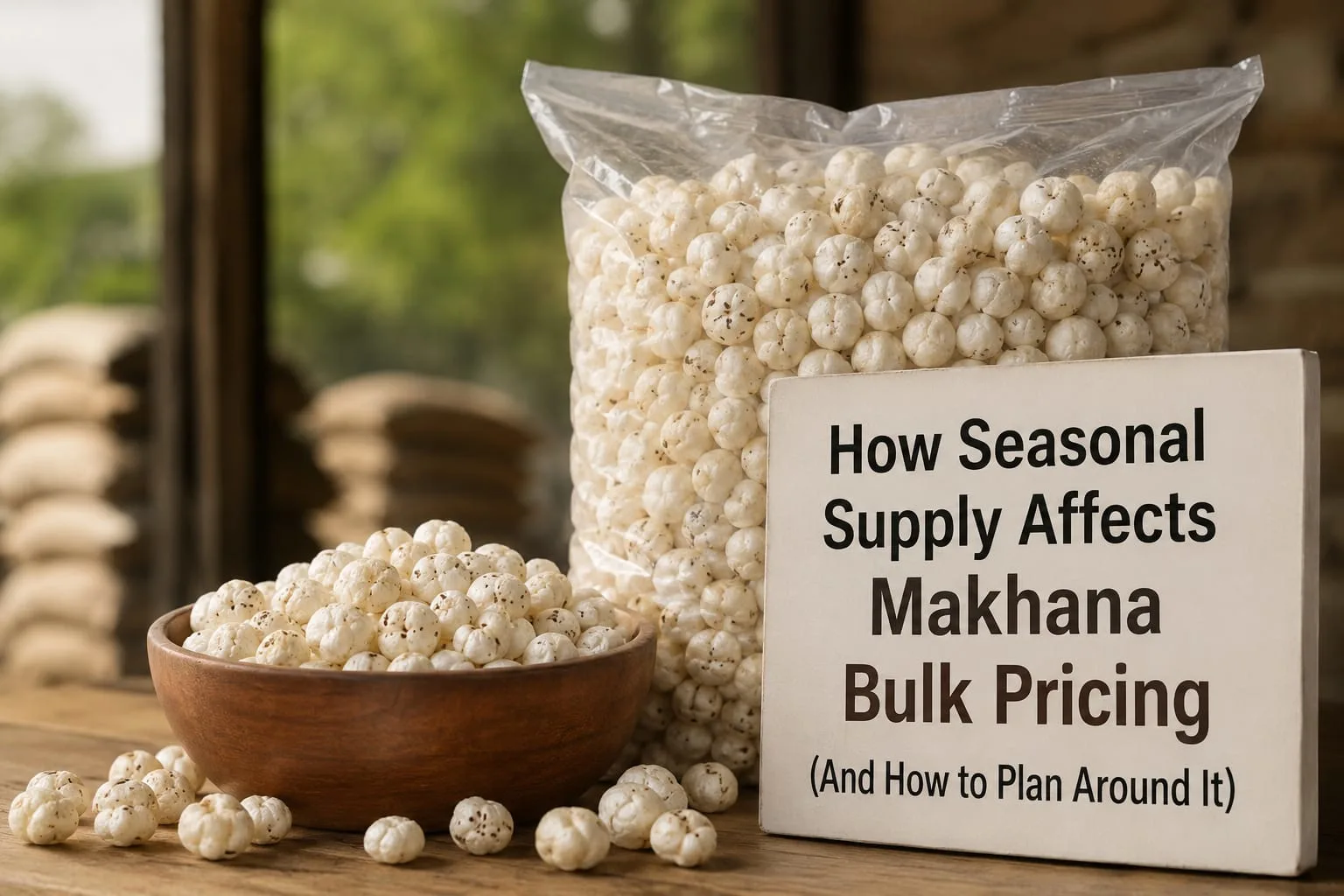
The makhana industry has grown significantly over the last few years. What was once considered a traditional food consumed mainly during fasting periods is now a popular healthy snack across retail, wholesale, and international markets. As demand continues to rise, buyers are paying closer attention to one important factor that directly impacts profitability: bulk pricing.
If you are a wholesaler, retailer, exporter, private-label brand, or food distributor, understanding how seasonal supply affects makhana prices can help you make better purchasing decisions. Many businesses focus only on demand trends, but supply fluctuations often play an even bigger role in determining wholesale rates.
Unlike many packaged foods that can be produced consistently throughout the year, makhana depends heavily on agricultural cycles, harvesting seasons, weather conditions, processing capacity, and inventory availability. So, understanding the seasonal patterns allows buyers to purchase at the right time, negotiate better rates, avoid supply shortages, and maintain consistent product availability throughout the year.
In this guide, we'll explore how seasonal supply influences makhana bulk pricing, why prices rise and fall during different periods, and the practical strategies businesses can use to manage costs more effectively.
Understanding the Seasonal Nature of Makhana Production
Before discussing pricing, it's important to understand that makhana is not a year-round crop.
The majority of commercial makhana production is in Bihar, which contributes the largest share of India's overall production, because cultivation follows a seasonal cycle, the amount of fresh stock entering the market changes throughout the year.
This seasonal production pattern affects:
- Raw material availability
- Processing volume
- Market inventory
- Wholesale supply
- Export commitments
Unlike industrial products that can be manufactured continuously, makhana availability is closely tied to agricultural output.
Why Seasonal Supply Directly Impacts Bulk Pricing
When supply enters the market in large quantities after harvest, prices often remain relatively stable because buyers have multiple sourcing options. However, as inventory gradually decreases and demand continues, prices typically begin to rise.
Several factors contribute to this pattern:
1. Increased Demand with Limited Fresh Supply
As harvested stock gets consumed, the market relies on stored inventory. Limited availability can push prices upward.
2. Inventory Holding Costs
Suppliers storing stock for several months incur warehousing and inventory management costs, which often get reflected in pricing.
3. Export Commitments
Growing international demand can reduce domestic availability, especially during periods of lower production.
4. Market Speculation
Price expectations among traders and wholesalers sometimes influence buying behaviour, which can further affect market rates.
Key Seasonal Periods That Influence Makhana Pricing
1. Post-Harvest Period
The months following harvest generally see the highest availability in the market.
During this period:
- Supply is relatively abundant
- Procurement options increase
- Wholesale competition rises
- Buyers may receive better pricing opportunities
For bulk buyers, this is often one of the most favorable periods for inventory planning.
2. Mid-Season Inventory Period
As the market moves further away from harvest season, inventory begins to tighten gradually.
During this phase:
- Quality stock becomes more selective
- Premium grades may become harder to source
- Prices begin showing upward movement
Businesses that delay purchasing often start experiencing higher procurement costs.
3. Lean Supply Period
Lean periods occur when available inventory decreases significantly while market demand remains strong.
Common outcomes include:
- Higher wholesale rates
- Limited availability of premium grades
- Longer procurement lead times
- Reduced negotiation flexibility
This period often creates challenges for businesses that depend on regular bulk purchasing.
How Weather Conditions Affect Seasonal Supply
Weather remains one of the biggest variables affecting makhana production.
Factors such as:
- Excess rainfall
- Flooding
- Water level fluctuations
- Temperature changes
These factors can impact crop yield and quality. So, when production volumes decrease due to unfavorable conditions, supply constraints often lead to stronger pricing pressure throughout the market.
How Makhana Wholesale Prices Move Through the Year
Here's how bulk makhana pricing typically behaves across the calendar:
1. July–October (Post-Harvest Season)
This is the sweet spot for bulk buyers. Fresh makhana enters the market. Wholesale rates in Bihar are at their lowest because supply is abundant and processors are moving volume. Buyers who can commit to large orders during this window — and have the storage infrastructure to back it up — tend to lock in the best per-kg rates of the year.
2. November–January (Early Off-Season)
Stock remains available from the harvest, but it's now being stored. Prices begin their gradual upward climb. Festive demand during Diwali and winter also pushes consumption up, tightening available supply. Wholesale rates inch up, though they're still moderate compared to mid-year levels.
3. February–April (Mid Off-Season)
This is where pricing pressure really builds. The stored inventory from October has been drawing down for four to five months. Buyers who didn't stock up during the harvest window now face noticeably higher rates. For premium grades like King Size 6 and Super 6, prices in this period can be 20–30% higher than what they were in August.
4. May–July (Pre-Harvest Crunch)
The most expensive time to buy makhana in bulk. Inventory from the previous harvest is running low, and the next harvest is still weeks away. Off-season prices for top-grade makhana can reach ₹1,000–₹1,700 per kg in this window — sometimes higher for export-grade material. Buyers without advance stock face margin compression or must pass costs on to their customers.
Read More About: Is Makhana Business Profitable in 2026?
How Businesses Can Plan Around Seasonal Price Changes
1. Build Supplier Relationships
Strong supplier relationships often provide better visibility into market trends and upcoming supply conditions.
Benefits include:
- Early pricing updates
- Better allocation during shortages
- Improved negotiation opportunities
2. Purchase During High-Supply Periods
One of the most effective strategies is purchasing larger quantities when supply is abundant and prices are more competitive.
This helps:
- Reduce average procurement cost
- Improve margin stability
- Minimize future price risk
3. Maintain Safety Inventory
Businesses that rely heavily on consistent supply should maintain buffer inventory.
A safety stock helps:
- Prevent stockouts
- Reduce emergency purchases
- Improve customer service levels
4. Diversify Procurement Sources
Depending on a single supplier increases risk.
Working with multiple sourcing partners helps:
- Improve supply security
- Increase pricing flexibility
- Reduce disruption risk
5. Monitor Market Trends Regularly
Regular market monitoring helps buyers react before major price changes occur.
Track:
- Harvest reports
- Export activity
- Supplier updates
- Wholesale market movements
How Hybite Foods Supports Reliable Bulk Makhana Supply
For businesses looking to manage seasonal pricing challenges effectively, working with a reliable supplier is essential.
Hybite Foods focuses on providing quality makhana solutions for wholesalers, retailers, distributors, private-label brands, and bulk buyers. With a strong focus on product quality, consistent sourcing, and dependable supply, Hybite Foods helps businesses navigate market fluctuations more efficiently while maintaining reliable inventory availability.
Conclusion
Seasonal supply plays a major role in determining makhana bulk pricing. Factors such as harvest cycles, inventory levels, weather conditions, export demand, and market availability all contribute to price fluctuations throughout the year.
Businesses that understand these patterns are better positioned to control costs, secure quality inventory, and maintain healthier profit margins. Rather than reacting to market changes, successful buyers plan ahead, monitor supply trends, and build strong supplier relationships.
You Can Also Read More About: Decoding Makhana Grades: What Every Bulk Buyer Must Know
FAQs
1. Why do makhana prices change throughout the year?
Makhana prices fluctuate because production is seasonal. Factors such as harvest cycles, inventory availability, weather conditions, and market demand can all affect bulk pricing.
2. Which is the best time to buy makhana in bulk?
The best time is usually during or shortly after the harvest season when supply is higher and wholesale prices are generally more stable.
3. Does weather affect makhana prices?
Yes. Floods, irregular rainfall, drought conditions, and other weather-related issues can impact production and reduce supply, which may lead to higher prices.
4. How does export demand impact domestic makhana pricing?
When export demand increases, more stock is sent to international markets. This can reduce domestic availability and contribute to price increases within India.
5. What factors should buyers monitor before purchasing makhana in bulk?
Buyers should track harvest seasons, weather conditions, export trends, market demand, inventory levels, and supplier updates before making large purchases.