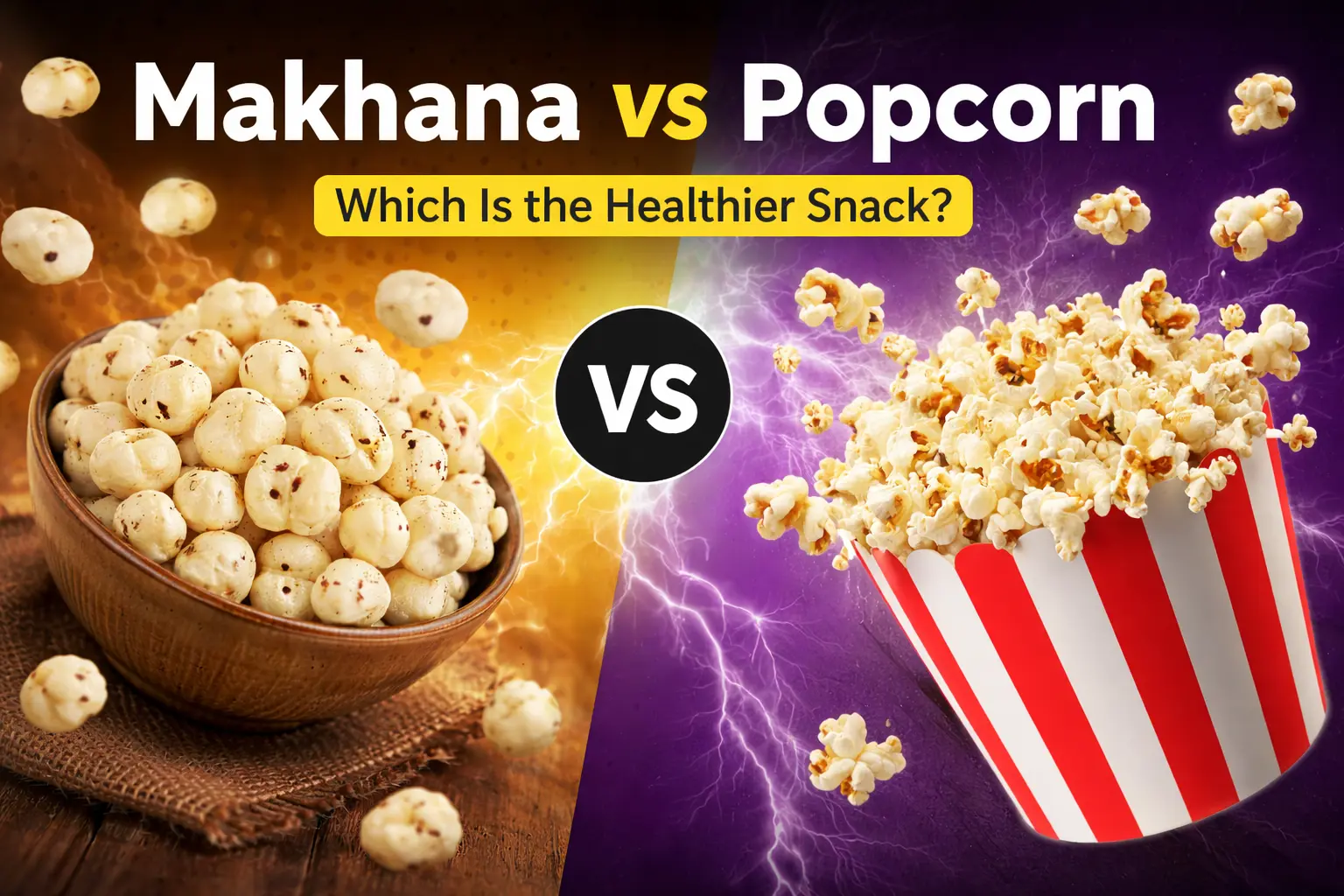
Snacking has become a regular part of our daily routine - if it’s something to munch on during work, a quick bite in the evening, or a light option while watching a movie, but with so many choices available, picking the right snack can make a big difference to your health. Two popular options people often compare that is makhana (fox nuts) and popcorn. Both are crunchy, convenient, and widely consumed, but they are not the same when it comes to nutrition and overall health benefits.
In this guide, we’ll take a closer look at makhana vs popcorn, compare their nutritional value, and help you understand which one is a better fit for your health.
What Is Makhana?
Makhana, also known as fox nuts or lotus seeds, comes from the plant Euryale ferox. It has been consumed in India for centuries and is widely used in both snacks and traditional recipes. Today, makhana is gaining popularity as a healthy snack for weight loss, thanks to its light texture and nutritional value.
Key Features of Makhana:
- Low in calories
- Almost fat-free
- Good source of plant-based protein
- Rich in minerals like magnesium and potassium
- Naturally gluten-free
So, because of these qualities, makhana is often recommended as a healthy evening snack and a better alternative to fried foods.
What Is Popcorn?
Popcorn is made by heating dried corn kernels until they pop. It’s one of the most popular snacks worldwide, especially in cinemas and at home. While plain popcorn can be a decent snack, the problem starts when it is loaded with butter, oil, salt, or artificial flavoring.
Key Features of Popcorn:
- Naturally made from whole grain corn
- Light and crunchy texture
- Can be low in calories (if air-popped)
- Contains dietary fiber
- Easily available in multiple variants
Types of Popcorn:
- Air-popped popcorn
- Butter popcorn
- Flavored or packaged popcorn
The overall nutritional value of popcorn depends largely on preparation. Keeping it simple makes it healthier, while heavy toppings can reduce its benefits.
Makhana vs Popcorn: Nutritional Comparison
Let’s compare both snacks side by side to understand which one is healthier.
|
Nutrient (per 100g) |
Makhana |
Popcorn |
|
Calories |
~347 kcal |
~387 kcal |
|
Protein |
~9–10g |
~11–12g |
|
Carbohydrates |
~76g |
~77g |
|
Fiber |
~14g |
~15g |
|
Fat |
~0.1g |
~4–5g |
|
Antioxidants |
High |
Moderate |
|
Minerals |
High |
Moderate |
What This Means:
- Makhana is lower in fat and calories
- Popcorn has slightly more protein but also more fat
- Makhana offers better mineral content
- Both have fiber, but makhana is easier to digest
Is Makhana Healthier Than Popcorn?
This is one of the most searched questions:
Is makhana healthier than popcorn?
In most cases, yes — makhana is the healthier option, especially if you are focusing on weight loss or clean eating.
Let’s understand in detail:
1. Lower in Calories and Fat
When it comes to choosing a snack for daily consumption, calories and fat content play a big role. If you’re trying to manage your weight or stay in a calorie deficit, even small choices can make a difference. This is where makhana stands out as a lighter and cleaner option compared to most snacks.
Why makhana is better:
- Makhana is low in calories and almost fat-free
- Popcorn, especially butter popcorn, can quickly become high in calories
- It fits easily into a calorie-controlled diet
This makes makhana a safer and more practical option for regular snacking.
2. Better for Weight Loss
A common question people ask is: makhana vs popcorn for weight loss — which is better? The answer depends on how the snack supports your overall eating habits. Makhana helps control hunger and reduces unnecessary cravings, which is key for weight management. It keeps you satisfied without adding extra calories.
Why makhana supports weight loss:
- Keeps you full for a longer time
- Helps reduce unnecessary snacking
- Does not add excess fat to your diet
Popcorn can also support weight loss, but only when it is air-popped and consumed without butter or heavy seasoning.
3. Easier to Digest
Digestibility is often overlooked when choosing snacks, but it matters for daily consumption. Makhana is known for being light on the stomach and is commonly included in traditional diets, especially during fasting. On the other hand, popcorn can sometimes feel heavy if eaten in large quantities or prepared with oil and butter.
Digestive benefits of makhana:
- Light and easy to digest
- Suitable for regular consumption
- Does not cause heaviness
Possible issues with popcorn:
- Can cause bloating
- May lead to gas
- Can create digestive discomfort if overeaten
4. Rich in Antioxidants
Makhana is not just a light snack — it also provides important nutrients, including antioxidants. These compounds help protect the body from damage caused by free radicals and support overall health. This is one reason why makhana is often linked to better skin and wellness.
Benefits of antioxidants in makhana:
- Help reduce oxidative stress
- Support overall body health
- Contribute to healthier-looking skin
That’s why many people ask: does makhana make skin glow?
Yes, regular consumption can support skin health over time.
5. Better for Heart Health
Heart health is another important factor when choosing everyday snacks. Makhana is naturally low in sodium and contains minerals like magnesium, which are beneficial for maintaining healthy blood pressure. Popcorn can also be a decent option, but only if it is prepared without excessive salt and butter.
Why makhana supports heart health:
- Low in sodium
- Rich in magnesium
- Helps maintain balanced blood pressure
Keeping your snack simple makes a big difference in long-term health.
6. Low Glycemic Index
For people managing blood sugar levels, the glycemic index of food is important. Makhana has a relatively low glycemic index, which means it releases energy slowly and does not cause sudden spikes in blood sugar. This makes it the best choice for controlled diets.
Who benefits from this:
- People with diabetes
- Individuals on controlled or balanced diets
- Anyone looking for steady energy levels
Choosing snacks with a lower glycemic impact can help maintain better overall health.
Checkout: Health Benefits of Makhana
When to Choose Popcorn vs Makhana: The Right Snack for Every Situation
When Popcorn Can Be a Good Option
- Best if you like strong and bold flavors
- Works well with butter, cheese, caramel, or spicy masala
- Gives a crispy and airy crunch
- Feels more like a tasty treat or indulgent snack
- Perfect for movie nights or cravings for flavorful snacks
When Makhana Is the Better Choice
- Ideal if you prefer a mild and subtle taste
- Has a light nutty flavor that isn’t overpowering
- Offers a soft and light crunch
- Can be lightly seasoned for a simple and balanced taste
- Great for regular snacking without feeling heavy
Makhana vs Popcorn: Final Verdict
So, which one should you choose?
If you compare both options honestly, makhana clearly stands out as the healthier snack.
Why Makhana Wins:
- Lower in fat
- Lower in calories
- Easier to digest
- Rich in antioxidants and minerals
- Better for weight loss and daily consumption
Popcorn can still be a good occasional snack, but makhana is more suitable for regular use.
Conclusion
When it comes to choosing between makhana and popcorn, the better option depends on how serious you are about your health goals. While both snacks can be part of a balanced diet, makhana offers a cleaner, lighter, and more nutrient-rich alternative.
It fits easily into modern eating habits — whether you’re trying to manage weight, improve digestion, or simply replace unhealthy snacks. The key is to keep it simple, control portions, and avoid over-processing. If you’re looking for a snack you can rely on daily without second thoughts, makhana is the smarter and more practical choice.
You Can Also Read More About: How Much Makhana Should You Eat Daily?
FAQs
1. Is makhana healthier than popcorn?
Yes, makhana is generally healthier because it is lower in fat, easier to digest, and richer in minerals.
2. Makhana vs popcorn for weight loss — which is better?
Makhana is better for weight loss as it is low in calories and keeps you full for longer.
3. Can I eat makhana daily?
Yes, you can eat makhana daily in moderate amounts as part of a balanced diet.
4. Is popcorn a healthy snack?
Popcorn can be healthy if it is air-popped and free from butter and excess salt.
5. Does makhana help reduce belly fat?
Makhana can support weight loss, which may help reduce belly fat when combined with a healthy diet.
6. How much makhana should I eat daily?
Around 25–30 grams per day is a healthy portion.
7. Is makhana good for digestion?
Yes, makhana is light and easy to digest, making it suitable for regular consumption.
8. Can popcorn cause weight gain?
Yes, especially if it contains butter, oil, or added flavors.
9. Is makhana good for skin?
Yes, its antioxidants can help support healthier and glowing skin.
10. Which snack is better for daily eating?
Makhana is better for daily consumption due to its balanced nutrition and low fat content.