
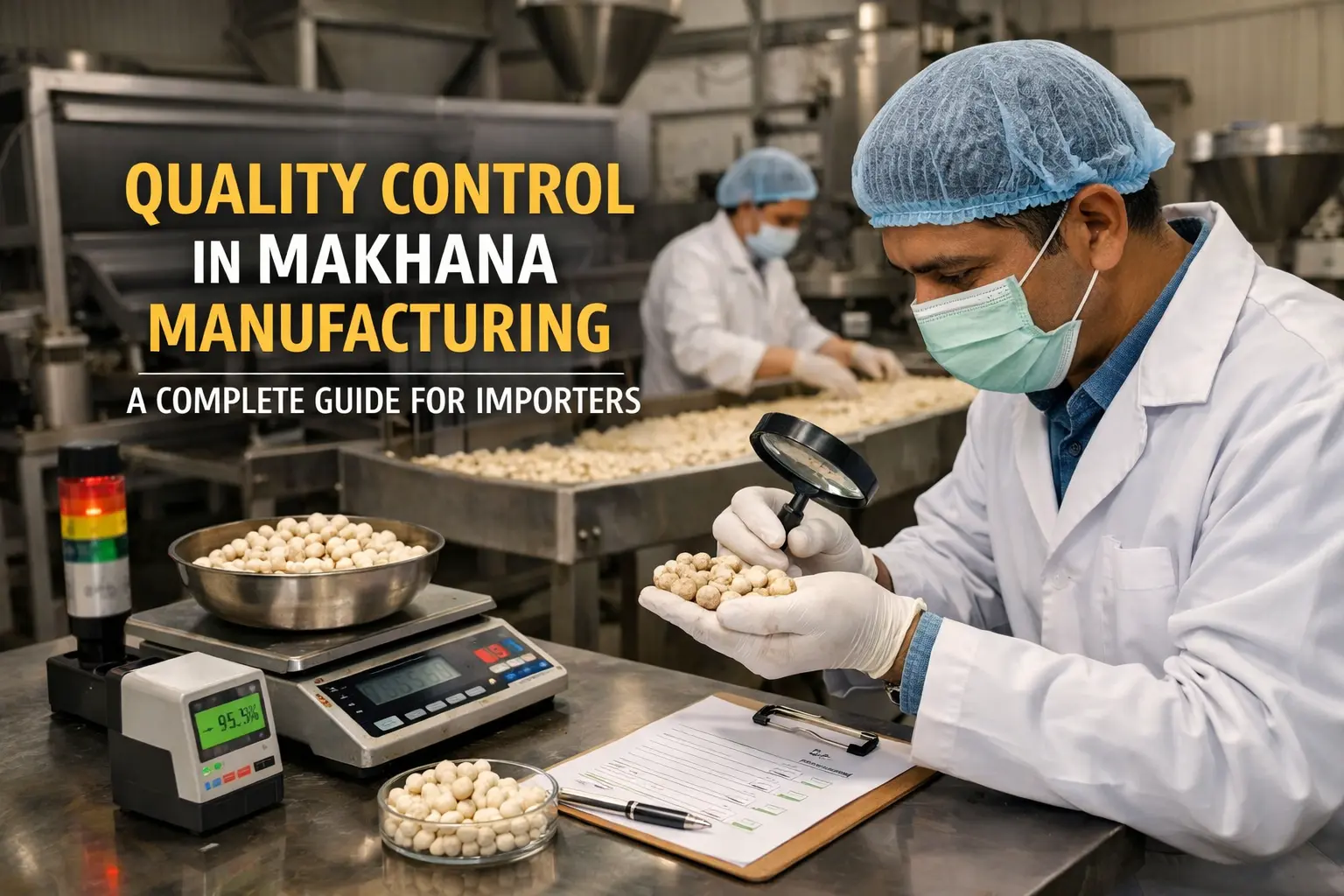
When you’re sourcing makhana in bulk, quality is not just a preference—it’s a business decision. If you’re an importer, distributor, or food brand, the consistency, safety, and grading of makhana directly impact your product quality, brand reputation, and customer retention.
India dominates the global supply of fox nuts, and with increasing demand for healthy snacks, more buyers are entering the market—but not all makhana are the same. The difference between premium-grade and average-quality makhana comes down to one critical factor: quality control in makhana manufacturing. Working with an experienced makhana manufacturer ensures that these standards are built into every stage of production, not added as an afterthought.
This guide breaks down how quality is maintained at every stage—from pond harvesting to final packaging—so you can make informed sourcing decisions.
Why Quality Control Matters in Makhana Manufacturing
In bulk orders, small mistakes can lead to major issues. Poor quality makhana can result in:
- Broken or uneven kernels
- Moisture-related spoilage
- Poor roasting performance
- Reduced shelf life
- Customer complaints and returns
For importers and wholesalers, this means higher rejection rates and lower margins. That’s why reliable makhana suppliers in India follow strict quality control measures across every stage of production.
Understanding Makhana Quality: What Importers Should Look For
Before diving into the process, it’s important to understand how makhana quality is evaluated in the market.
Key Quality Parameters
- Size & Grading – Larger, uniform makhana (often graded as Super, Premium, or Standard)
- Color – Bright white or creamy appearance (no dark spots)
- Texture – Crisp when roasted, not chewy
- Purity – Free from dust, stones, or impurities
- Moisture Content – Ideally low to prevent spoilage
- Breakage Ratio – Minimal broken pieces
High-quality makhana always shows consistency across batches—this is what serious buyers look for.
Step by Step Quality Control in Makhana Manufacturing
1. Harvesting from Ponds
The process begins in natural ponds and wetlands, mainly in Bihar, where makhana is traditionally cultivated. Farmers manually collect the seeds from the bottom of the water using small boats or by wading into the ponds. This step requires skill and experience, as only mature seeds are selected to ensure better quality and yield in further processing.
Quality Check at This Stage:
- Only best seeds are collected
- Damaged seeds are discarded early
- Harvesting is done within a specific time window to maintain consistency
A well-managed harvesting process sets the foundation for better final output.
2. Seed Cleaning and Primary Sorting
After harvesting, the seeds are perfectly cleaned to remove mud, plant residue, and other impurities collected from the ponds. This is followed by basic sorting, where damaged or unusable seeds are separated. Proper cleaning at this stage ensures that only good-quality seeds move forward for further processing.
Quality Control Measures:
- Manual cleaning followed by basic sorting
- Removal of foreign particles
- Initial grading based on size
At this stage, suppliers ensure only usable seeds move forward in the processing of makhana.
3. Drying Process
After cleaning, the seeds are spread out under the sun to reduce excess moisture. This step is important to improve shelf life and prepare the seeds for further processing. Proper drying ensures the seeds don’t spoil and helps maintain consistent quality in the next stages.
Why This Measures:
- Prevents fungal growth
- Improves shelf life
- Prepares seeds for roasting
Quality Checks:
- Uniform drying across batches
- Avoiding over-drying or under-drying
Improper drying is one of the most common reasons for poor-quality makhana.
4. Roasting (Pre-Heating Stage)
Once dried, the seeds are roasted at controlled temperatures using traditional earthen ovens or modern equipment. This step helps prepare the seeds for popping by evenly heating them. Proper roasting is important to ensure consistent expansion and better-quality makhana in the next stage.
Quality Control Focus:
- Temperature control
- Even roasting
- Batch consistency
Proper roasting ensures that the seeds can be popped correctly in the next stage.
5. Popping Process (Kernel Formation)
This is the most important stage in the processing of makhana, where the roasted seeds are cracked and popped to form the white kernels. Skilled workers apply the right amount of pressure and timing to ensure proper expansion. This step directly affects the size, texture, and overall quality of the final makhana.
Quality Factors:
- Skilled labor handling
- Correct timing and pressure
- Maximum expansion of seeds
Well-popped makhana results in:
- Better size
- Improved texture
- Higher market value
Poor popping leads to broken or underdeveloped kernels, which reduces export quality.
6. Final Grading and Sorting
After popping, the makhana is carefully sorted based on size, appearance, and quality. Larger and more uniform kernels are separated as premium grades, while smaller or broken pieces are categorized differently. This step ensures consistency in bulk supply and helps buyers get the exact quality they require.
Common Grades in Bulk Supply:
- Super Grade (large size, premium quality)
- Medium Grade
- Small Grade
- Broken or lower-grade
Quality Control Includes:
- Size-based segregation
- Removing burnt or discolored pieces
- Ensuring uniformity in each batch
For importers, consistent grading is one of the biggest indicators of a reliable supplier.
7. Quality Testing and Inspection
Before packaging, the makhana goes through detailed quality checks to ensure it meets required standards. Manufacturers inspect factors like moisture level, color, size consistency, and overall cleanliness. This step helps ensure that only high-quality makhana is packed and supplied for bulk orders.
Testing Parameters:
- Moisture level
- Visual inspection
- Texture and crispness
- Contamination check
Some exporters also follow:
- Food safety standards
- Export compliance checks
- Lab testing (if required by buyers)
8. Packaging and Storage
After quality checks, makhana is packed using food-grade, moisture-resistant materials to maintain its freshness and crunch. Proper packaging and storage in a cool, dry environment are essential to prevent moisture, spoilage, and loss of quality during transportation and long-term storage.
Quality Control in Packaging:
- Use of moisture-proof packaging
- Food-grade materials
- Proper sealing
Storage Conditions:
- Cool and dry environment
- Protection from humidity
- Pest control measures
Good packaging ensures longer shelf life and maintains product quality during shipping.
Common Quality Issues Importers Should Avoid
Many buyers face issues not due to lack of supply, but because proper quality checks are overlooked. To ensure consistent product quality, watch out for these common problems:
- Mixed or inconsistent grading: Different sizes and qualities in one batch can affect product uniformity.
- High moisture content: Leads to spoilage, reduced shelf life, and possible fungal growth.
- Excessive broken pieces: Indicates poor processing or handling, reducing overall value.
- Yellowish or dull color: A sign of low-quality or improperly processed makhana.
- Poor packaging: Increases the risk of moisture exposure and damage during transit.
Always ask for samples and verify quality before placing bulk orders to avoid these issues.
Why You Should Buy Makhana from Hybite Foods
When you’re sourcing makhana in bulk, choosing the right supplier directly impacts your product quality, consistency, and customer satisfaction. Here’s why Hybite Foods stands out as a reliable partner for bulk makhana supply:
1. Strong Expertise in Makhana Processing
Hybite Foods follows a structured and well-managed process—from sourcing raw seeds to final grading—ensuring consistent quality across every batch.
2. Standardized Grading System
Makhana is carefully sorted based on size, color, and quality. This helps bulk buyers receive uniform products that meet specific market requirements.
3. Bulk Supply Capability
Hybite Foods is equipped to handle large-volume orders efficiently without compromising on product quality or delivery timelines.
4. Export-Ready Quality and Support
From food-grade packaging to proper documentation, every step is aligned with export standards—making it easier for international buyers to source without complications.
5. Focus on Quality Control
Strict quality checks are maintained at every stage, including cleaning, drying, roasting, and final inspection, ensuring the makhana meets both domestic and global expectations.
6. Private Label Makhana Private Label Makhana Solutions Hybite Foods also supports private label makhana requirements, helping brands source and package makhana under their own label — with custom sizing, packaging design, and grading specifications tailored to their market.
Quality Certifications and Export Standards
For international buyers, certifications can add another layer of trust.
Common certifications include:
- FSSAI (India):
This is the basic food safety certification required for food businesses in India. It ensures that the makhana is processed, handled, and stored following proper hygiene and safety standards. - ISO Standards:
ISO certifications indicate that the manufacturer follows internationally accepted quality management systems. This helps ensure consistency in production, processing, and overall product quality. - HACCP Compliance:
HACCP (Hazard Analysis and Critical Control Points) focuses on identifying and controlling potential food safety risks during processing. It ensures that the product is safe for consumption at every stage. - Organic Certification (if applicable):
Organic certification confirms that the makhana is produced without synthetic chemicals or pesticides. This is especially important for buyers targeting premium or health-focused markets.
While not all suppliers have every certification, serious exporters usually meet basic food safety requirements.
Final Thoughts
Quality control in makhana manufacturing is not a single step—it’s a continuous process that starts from harvesting and continues until packaging.
For importers and bulk buyers, understanding this process helps in:
- Selecting the right supplier
- Reducing risk
- Ensuring product consistency
- Building long-term supply relationships
As global demand for healthy snacks continues to grow, makhana presents a strong opportunity—but only when quality is maintained at every stage.
If you’re planning to source makhana in bulk, focus on suppliers who prioritize quality, transparency, and consistency. That’s what separates a one-time deal from a long-term business partnership.