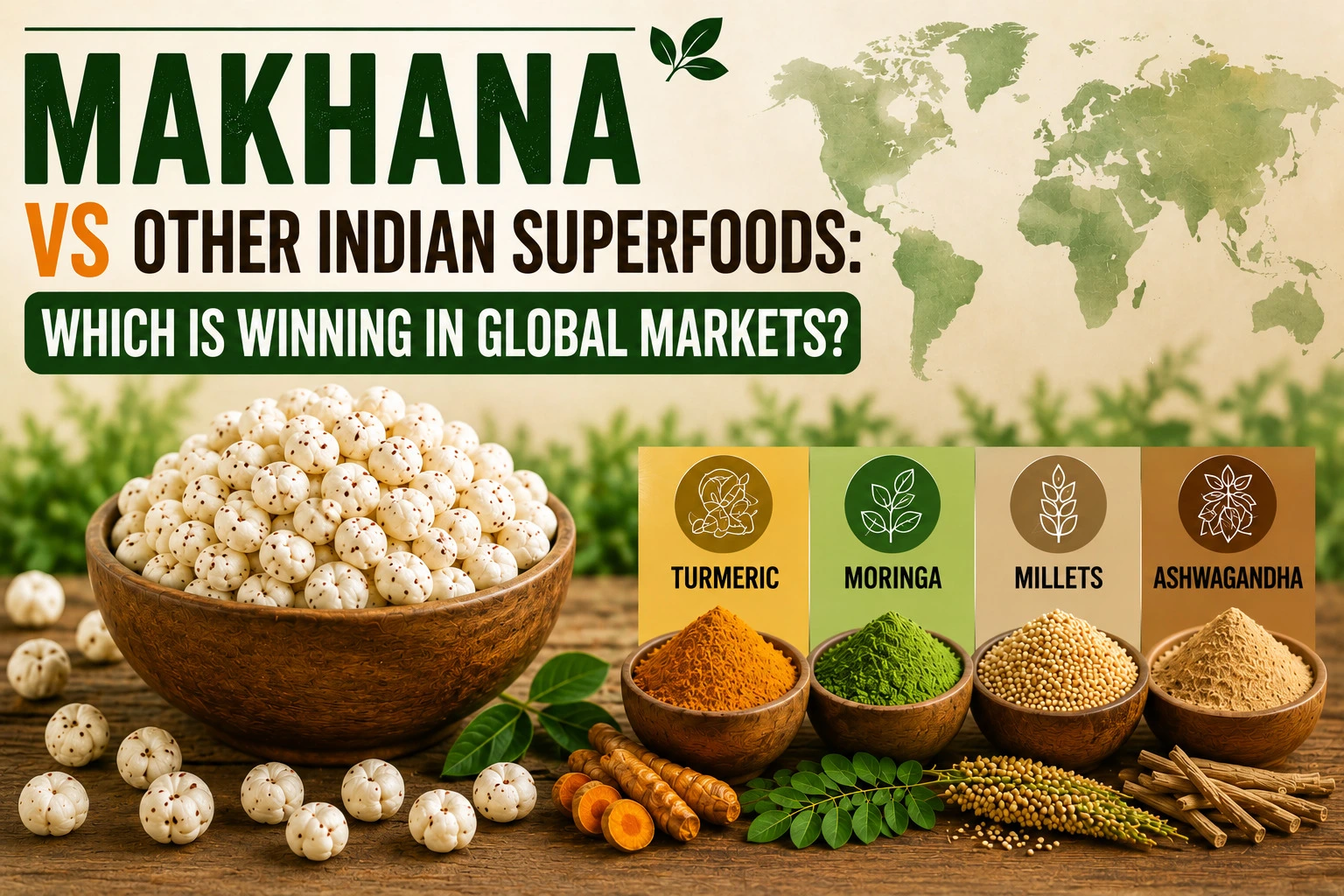
Healthy eating is no longer limited to gyms or diet trends — it has become a major part of everyday consumer behavior across global markets. People in countries like the USA, UK, Germany, Australia, and Canada are actively searching for foods that are natural, nutrient-rich, minimally processed, and easy to include in daily diets. This shift has created huge international demand for Indian superfoods. Products like turmeric, moringa, millet, ashwagandha, and makhana are now gaining strong visibility in retail stores, health food chains, online marketplaces, and wellness-focused product categories.
Among these, makhana is emerging as one of the fastest-growing products in the healthy snacking industry. Its light texture, clean-label appeal, gluten-free nature, and ready-to-eat convenience have helped it attract attention far beyond India.
In this guide, we’ll compare makhana with other popular Indian superfoods and understand which products are growing the fastest, what consumers prefer internationally, and why makhana is becoming a major player in the global health food market.
Comparing Makhana with Other Indian Superfoods
1. Makhana vs Turmeric
Turmeric became globally popular due to the growing focus on immunity, anti-inflammatory foods, and wellness-based nutrition. It is widely used in supplements, golden milk products, health drinks, and wellness powders. However, turmeric is mostly consumed as an ingredient rather than a direct snack product.
Makhana, on the other hand, fits directly into the healthy snacking category. It is ready to eat, easy to consume daily, and more suitable for supermarket shelves and modern retail formats. While turmeric performs strongly in supplements and functional beverages, makhana performs better in healthy snacking, fitness foods, and low-calorie snack categories.
This gives makhana a stronger direct-consumer appeal in retail snack markets.
2. Makhana vs Moringa
Moringa is highly valued for its nutritional profile and is commonly sold in powder form, capsules, and smoothie blends. It has strong demand in the wellness and supplement industry, especially among health-conscious consumers. However, one major challenge with moringa is regular consumption. Many consumers buy moringa for its health benefits but do not use it consistently because of its strong taste and limited convenience.
Makhana has an advantage here because it is crunchy, snack-friendly, and easy to eat regularly. It naturally fits into daily eating habits without requiring preparation or mixing. While moringa dominates nutritional supplements and herbal wellness categories, makhana performs better in healthy packaged snacks, retail convenience foods, and daily snacking.
The ease of consumption gives makhana a major advantage in broader consumer markets.
3. Makhana vs Millets
Millets have received major global attention due to their nutritional value, sustainability benefits, and government promotion. They are commonly used in flour products, breakfast cereals, and health-focused meals but most millet-based foods still require cooking or preparation, which limits convenience for modern consumers looking for quick snack options.
Makhana performs differently because it is instantly consumable, portable, and snack-oriented. Consumers can eat it directly without preparation, making it more suitable for busy lifestyles. Millets perform strongly in staple food replacement and health-conscious cooking, while makhana performs strongly in on-the-go snacking, fitness foods, and premium packaged snack categories.
Convenience plays a major role in makhana’s faster retail growth.
4. Makhana vs Ashwagandha
Ashwagandha is widely known in the herbal wellness and stress-management industry. It is mostly consumed through powders, capsules, and Ayurvedic formulations. This makes ashwagandha more niche and supplement-focused compared to makhana.
Makhana appeals to a much wider audience because it is consumed as a regular snack rather than a specialized wellness product. Consumers can include it easily in daily diets without following a supplement routine. While ashwagandha performs strongly in stress-relief and herbal wellness products, makhana dominates mainstream healthy snacking, fitness nutrition, and everyday consumption categories.
Its broader consumer usability gives makhana stronger mass-market potential.
5. Makhana vs Amla
Amla is highly popular for immunity and vitamin C support. It is commonly used in juices, powders, candies, and wellness supplements. However, fresh amla has some limitations, including sour taste, seasonal availability, and shorter shelf life. Even processed amla products often contain added sugar or preservatives to improve taste and storage stability.
Makhana offers better convenience in comparison. It has a longer shelf life, easier packaging options, and stronger positioning as a healthy snack product. Also amla performs well in immunity-focused products and wellness supplements, makhana performs better in modern snacking, retail packaging, and export-oriented healthy food markets.
Its shelf stability and snack convenience give makhana a strong commercial advantage globally.
If you are looking to start a makhana business then this is for you "How to start a makhana wholesale Business"
Why Global Markets Prefer Snack-Based Superfoods
One major reason makhana is growing rapidly is changing consumer behavior.
Modern consumers prefer:
- Ready-to-eat products
- Convenient nutrition
- Portable snacks
- Simple ingredients
This trend benefits makhana more than powdered or supplement-based superfoods.
Why Makhana Fits Western Health Trends Perfectly
1. Gluten-Free Demand
Makhana is naturally gluten-free, which makes it highly attractive in:
- USA
- Europe
- Australia
The gluten-free market continues expanding rapidly.
2. Plant-Based Eating
Global consumers are shifting toward:
- Vegan diets
- Plant-based foods
- Dairy-free snacking
Makhana fits naturally into these categories.
3. Low-Calorie Snacking
One of the biggest health trends globally is calorie-conscious eating.
Makhana is popular because it is:
- Light
- Filling
- Lower in calories compared to fried snacks
4. Clean Label Food Trend
Consumers now prefer foods with:
- Simple ingredients
- Less processing
- Minimal additives
Plain roasted makhana fits perfectly into this clean-label movement.
Which Indian Superfood Is Winning Globally?
Different superfoods dominate different categories.
Turmeric:
Strong in wellness and supplements
Moringa:
Strong in nutrition products
Millets:
Strong in staple food categories
Ashwagandha:
Strong in herbal wellness
Makhana:
Strongest in healthy snacking and retail convenience
Among snack-focused superfoods, makhana is currently one of the fastest-growing products internationally.
Read about: Top 10 Countries Importing Indian Makhana
Conclusion
Indian superfoods are gaining strong global recognition as consumers shift toward healthier and more natural eating habits. Products like turmeric, moringa, millet, ashwagandha, and amla continue to perform well in wellness and nutrition categories, but makhana is creating a unique position for itself in the healthy snacking industry.
As global demand for healthy snacks continues to grow, makhana is expected to become one of the strongest Indian superfoods in retail, e-commerce, and export markets. Brands like Hybite Foods are also helping expand the reach of quality makhana products across domestic and international markets.
FAQs
1. Why is makhana becoming popular globally?
Makhana is becoming popular because it is a healthy, gluten-free, plant-based, and low-calorie snack option.
2. Why do consumers prefer makhana over moringa?
Makhana is easier to eat regularly and fits naturally into daily snacking habits.
3. Is makhana part of vegan and plant-based diets?
Yes, makhana is completely plant-based and suitable for vegan diets.
4. Which countries import Indian makhana the most?
USA, UK, UAE, Canada, Australia, and several European countries are major importers.