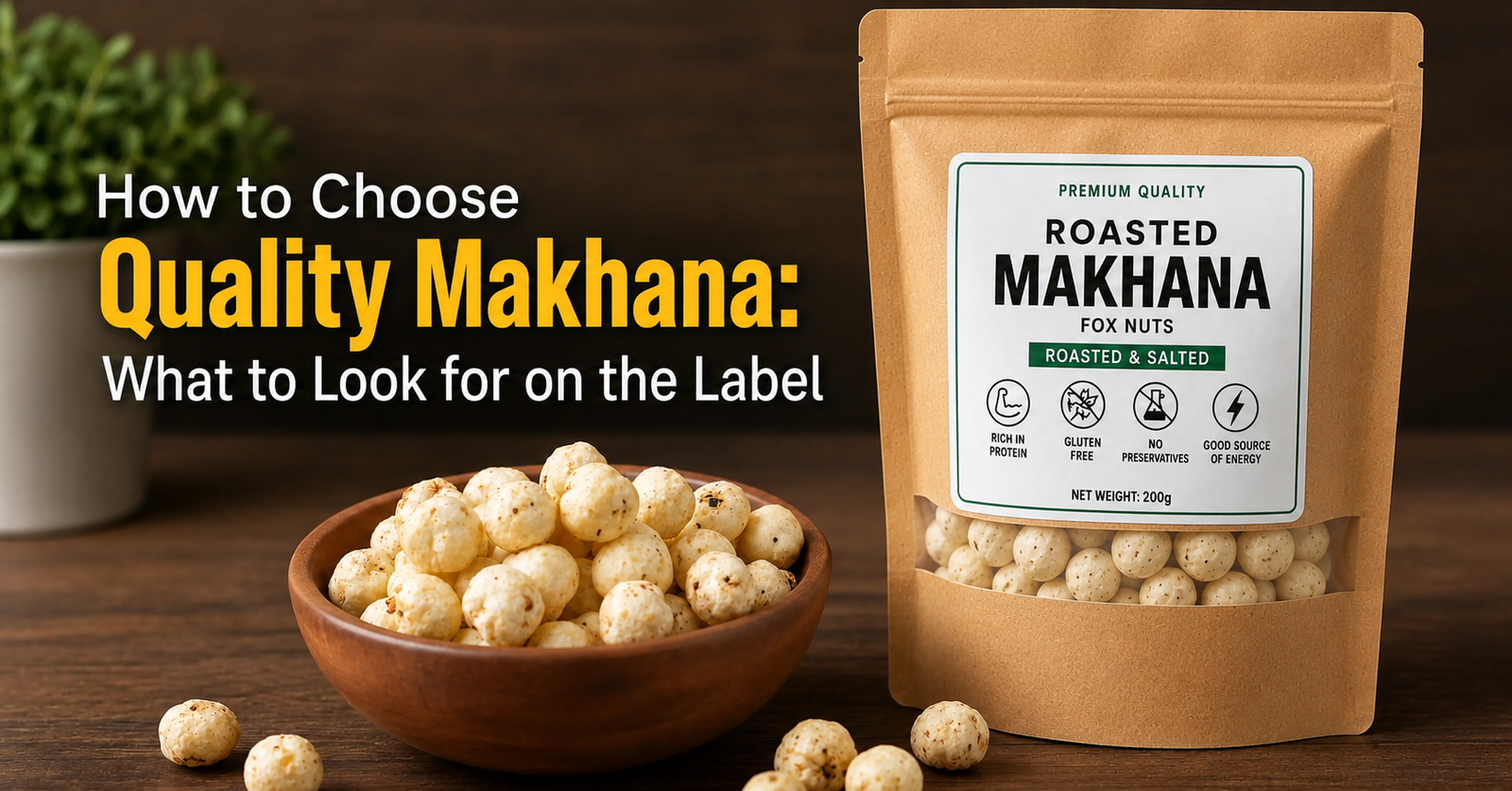
Consumers today have more makhana options than ever before. From plain roasted fox nuts and flavored makhana snacks to premium export-grade varieties, the market is filled with products that often look similar on the outside. However, not all makhana offers the same quality, freshness, taste, or nutritional value.
The simplest way to identify quality makhana is to check the label carefully before buying. A good makhana product should clearly mention ingredients, nutritional information, packaging details, manufacturing date, and quality certifications. These details help buyers understand exactly what they are purchasing and if the product meets their expectations or not. Many shoppers focus only on price or packaging design, but the real indicators of quality are usually found on the back of the pack. A quick label check can reveal whether the makhana is minimally processed, free from unnecessary additives, properly packed, and sourced from reliable manufacturers.
In this guide, we'll explain exactly how to choose quality makhana, what information to look for on the label, common mistakes buyers make, and how to identify products that offer better value, freshness, and consistency.
Why Checking the Label Matters Before Buying Makhana
The label is often the most reliable source of information about a product.
Before purchasing any makhana, buyers should understand:
- What ingredients are used
- If additives are included or not
- How fresh the product is
- Who manufactured it
- Proper quality standards are followed or not
A well-labeled product usually reflects a more transparent and professional manufacturing process.
What to Look for on a Makhana Label Before Buying
Before buying makhana, it's worth taking a quick look at the information printed on the pack. Many people focus on the front design or the price, but the most important details are usually mentioned on the label. A few minutes spent checking the ingredients, manufacturing date, nutritional information, and quality certifications can help you identify a fresher and better-quality product.
1. Check the Ingredient List First
The ingredient list is one of the quickest ways to evaluate makhana quality.
Look for:
- Makhana (Fox Nuts)
- Minimal seasoning (for flavored variants)
Try to avoid products that contain:
- Artificial flavor enhancers
- Excess preservatives
- Synthetic additives
- Unnecessary fillers
A clean and short ingredient list is often a sign of better-quality makhana.
2. Look for the Manufacturing and Packaging Date
Freshness plays a major role in the taste and crunch of makhana. Even premium-quality makhana can lose its texture if it has been stored for too long.
Always check:
- Manufacturing date
- Packaging date
- Best-before date
Fresh makhana generally offers:
- Better crunch
- Better flavor
- Better overall eating experience
Choosing recently packed products increases the chances of getting fresher makhana.
3. Check Nutritional Information
The nutrition panel helps you understand exactly what you're consuming. This becomes even more important if you're buying makhana for weight management, fitness goals, or healthy snacking.
Pay attention to:
- Calories
- Protein content
- Carbohydrates
- Fat content
- Fiber content
- Sodium levels
Health-conscious consumers often prefer products with balanced nutrition and lower sodium levels.
4. Verify FSSAI and Food Safety Details
Food safety information is a strong indicator of product reliability. Reputable brands clearly display their compliance and manufacturing details on the packaging.
Look for:
- FSSAI license number
- Manufacturer name and address
- Batch number
- Customer care information
These details indicate that the product follows food safety regulations and quality standards.
Never ignore food safety information when buying packaged makhana.
5. Check for Added Oils and Seasonings
Flavored makhana products can vary significantly in quality. Some brands use light roasting and balanced seasoning, while others rely heavily on oils and artificial flavoring.
Before buying, check:
- Type of oil used
- Quantity of added seasonings
- Artificial flavor ingredients
- Added preservatives
A better-quality product usually contains:
- Moderate seasoning
- Controlled oil usage
- Cleaner ingredients
If your goal is healthy snacking, choose products with simple and transparent seasoning profiles.
6. Identify the Type of Packaging
Packaging is more important than many buyers realize. Good packaging protects makhana from moisture and air exposure, helping preserve its freshness and crunch.
Look for:
- Properly sealed packaging
- Food-grade materials
- Strong moisture protection
- Resealable pouches when available
Good packaging helps prevent:
- Loss of crispness
- Product damage
- Reduced shelf life
Premium packaging often reflects better quality control and product care.
7. Check the Net Weight and Serving Information
Many buyers focus only on price and forget to compare the actual quantity they are getting. Net weight information helps you calculate the true value of a product.
Check:
- Net weight
- Serving size
- Number of servings per pack
This helps you:
- Compare products accurately
- Understand value for money
- Avoid misleading price comparisons
A cheaper packet may not always be the better deal if it contains significantly less product.
8. Look for Brand Transparency
A trustworthy brand is usually transparent about its products, sourcing practices, and customer support. Clear information builds confidence and helps buyers make informed decisions.
Look for details such as:
- Product sourcing information
- Manufacturing location
- Brand website
- Contact details
- Customer support channels
Transparent brands often demonstrate greater commitment to quality and customer satisfaction. Brands that openly share product information are generally more trusted by consumers and bulk buyers alike.
Also Checkout: Best Makhana Manufacturer in India
How to Identify Premium Quality Makhana
The label provides useful information, but physical quality also matters. Premium-quality makhana generally has:
1. Larger Size
Size is one of the first things buyers notice. Larger makhana kernels are generally considered premium because they are less common and often preferred by retailers, exporters, and consumers.
2. Uniform Appearance
Good-quality makhana should look consistent throughout the pack. The kernels should be fairly similar in shape and size rather than a mix of very large and very small pieces. Uniformity is usually a sign that the product has been properly graded and sorted before packaging.
3. White or Creamy Color
Premium makhana typically has a clean white or light creamy color. This natural appearance often indicates proper processing and handling. Dark spots, excessive discoloration, or uneven coloring may sometimes suggest lower-grade stock or poor storage conditions.
4. Better Crispness
Fresh makhana should be light, airy, and crispy. When you bite into it, it should have a pleasant crunch rather than feeling soft, rubbery, or chewy. Crispness is one of the strongest indicators of freshness and proper storage.
5. Minimal Broken Pieces
A quality pack of makhana should contain mostly whole kernels with very few broken pieces. Excessive breakage can occur due to poor handling, transportation, or lower grading standards.
How Wholesale Buyers Can Evaluate Makhana Quality
Bulk buyers often need to go beyond the consumer label.
Important factors include:
1. Product Consistency
Check whether every batch offers similar size, color, and texture.
2. Packaging Standards
Ensure packaging can handle transportation and storage requirements.
3. Certification Support
Ask suppliers about quality certifications and testing procedures.
4. Sample Evaluation
Always review samples before committing to large purchases.
Also Read About: How to Start a Makhana Wholesale Business
Tips for Choosing the Best Makhana
With so many makhana brands available today, choosing the right one can sometimes feel confusing. A reliable brand focuses on quality sourcing, proper processing, food safety, and consistent product standards. Taking a few extra minutes to compare brands can help you find makhana that offers better taste, freshness, and overall value.
When comparing brands, consider:
- Ingredient transparency
- Packaging quality
- Product freshness
- Food safety compliance
- Customer reviews and feedback
- Consistent quality standards
Price should never be the only deciding factor. In many cases, the cheapest option may compromise on freshness, grading, or packaging quality.
If you're looking for a trusted supplier, Hybite Foods focuses on delivering quality makhana with an emphasis on freshness, consistency, proper packaging, and customer satisfaction. Whether you're a consumer, retailer, wholesaler, or private-label buyer, choosing a reliable brand can make a significant difference in product quality and long-term value.
Conclusion
Choosing quality makhana starts with understanding the label. By checking ingredients, manufacturing details, nutritional information, certifications, and packaging quality, buyers can make better-informed decisions and avoid low-quality products. If you're purchasing for personal consumption, retail sales, wholesale distribution, or export purposes, a few extra minutes spent reviewing the label can help ensure better quality, freshness, and value.
As the healthy snacking market continues to grow, informed buyers will increasingly rely on transparency and quality indicators to choose the best makhana products available.
You Can Also Read More About: Certifications Required for Exporting Makhana
FAQs
1. How can I identify good-quality makhana?
Good-quality makhana is usually larger in size, crisp in texture, light white or creamy in color, and contains minimal broken pieces. Checking the label for freshness and ingredient details can also help.
2. What should I check on a makhana label before buying?
You should check the ingredient list, manufacturing date, best-before date, nutritional information, FSSAI details, and packaging quality before purchasing.
3. What certifications should a quality makhana product have?
Look for important details such as an FSSAI license number and complete manufacturer information. These indicate compliance with food safety regulations.
4. How does packaging affect makhana quality?
Good packaging protects makhana from moisture, air, and physical damage, helping maintain freshness, crunch, and shelf life.