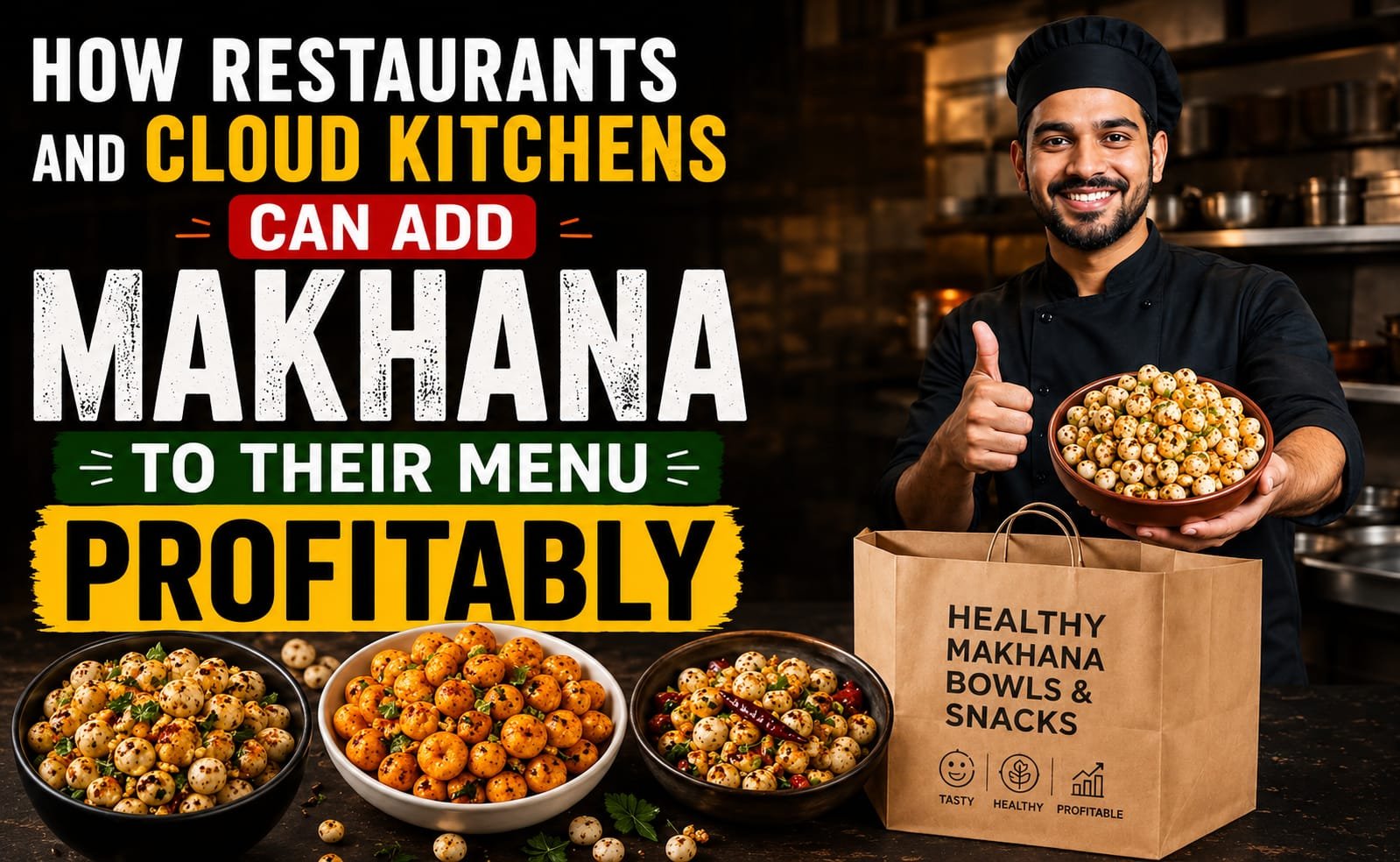
The food service industry is changing rapidly. Today's customers are no longer looking only for taste—they are also paying attention to nutrition, ingredients, calories, and overall food quality. As a result, restaurants and cloud kitchens are constantly searching for menu items that are healthy, unique, cost-effective, and profitable.
One ingredient that is gaining significant attention in the food industry is makhana, also known as fox nuts or lotus seeds. For restaurants, cafes, QSR chains, and cloud kitchens, makhana presents an excellent business opportunity. It requires minimal preparation, offers strong menu versatility, appeals to health-conscious consumers, and can generate attractive profit margins when positioned correctly.
If you operate a cafe, a cloud kitchen, a corporate catering business, or a modern restaurant, adding makhana-based menu items can help attract new customers while increasing average order value. In this guide, we'll find how restaurants and cloud kitchens can add makhana to their menu profitably, which menu formats work best, and how to maximize returns from this growing superfood category.
Why Makhana Is Best in Food Service
Consumer preferences have shifted significantly in recent years. More customers are actively searching for:
- Healthy snacks
- Low-calorie foods
- Gluten-free menu options
- Plant-based alternatives
- Clean-label ingredients
Makhana naturally fits into all these trends. It is light, versatile, easy to flavor, and can be incorporated into multiple menu categories without major operational changes. For food businesses, this means an opportunity to serve a trending product without investing heavily in new equipment or complex preparation methods.
Business Benefits of Adding Makhana to Your Menu
Before introducing any new ingredient, restaurant owners want to understand its commercial value. Makhana offers several advantages that make it suitable for food service operations.
Key benefits include:
- Low raw material wastage
- Long shelf life
- Easy inventory management
- Fast preparation time
- High menu versatility
- Strong consumer appeal
- Suitable for dine-in and delivery
Unlike many fresh ingredients, properly stored makhana remains usable for longer periods, helping reduce inventory losses.
Profitable Ways to Add Makhana to Your Menu
One of the biggest advantages of makhana is its flexibility. It can be used across multiple menu categories without requiring significant operational changes.
1. Roasted Makhana Snack Bowls
Roasted makhana snack bowls are one of the easiest and most profitable ways to introduce makhana to your menu. They require minimal preparation, can be customized with different seasonings, and appeal to customers looking for healthier snacking options.
Popular flavored makhana options include:
Business Advantages:
- Low preparation cost
- Quick serving time
- High profit margins
- Suitable for dine-in and delivery
- Easy to customize with seasonal flavors
2. Healthy Combo Meals
Consumers are more looking for balanced meal options rather than traditional fried sides. Replacing chips or fried snacks with makhana can instantly make a combo meal appear healthier and more premium.
Popular combinations include:
- Salad + Roasted Makhana Bowl
- Smoothie + Makhana Combo
- Sandwich + Makhana Snack Pack
- Wrap + Seasoned Makhana
Business Advantages:
- Increases average order value
- Supports healthy menu positioning
- Encourages combo purchases
- Enhances perceived meal value
3. Makhana-Based Salads
For health-focused restaurants, cafes, and wellness kitchens, makhana can be used as a crunchy topping or key ingredient in salads. It adds texture and visual appeal while helping the dish stand out from traditional salad offerings.
Popular menu ideas include:
- Avocado Salad with Roasted Makhana
- High-Protein Salad with Makhana
- Mediterranean Salad with Makhana Topping
- Quinoa and Makhana Salad Bowl
Business Advantages:
- Adds uniqueness to existing salads
- Increases menu differentiation
- Minimal increase in food cost
- Appeals to fitness-conscious customers
4. Makhana Chaat
Restaurants serving Indian or fusion cuisine can create innovative chaat options using makhana. It offers a healthier twist on traditional street-food favorites while maintaining strong flavor appeal.
Common ingredients may include:
- Roasted makhana
- Chopped onions and tomatoes
- Yogurt
- Mint chutney
- Tamarind chutney
- Fresh coriander
Business Advantages:
- Strong appeal in Indian markets
- Low ingredient cost
- High perceived value
- Suitable as an appetizer or snack item
Also Read About: Easy Makhana Recipes
5. Premium Makhana Dessert Bowls
Makhana is not limited to savory applications. It can also be used to create premium desserts that help restaurants offer something different from standard sweet dishes.
Popular dessert options include:
- Makhana Kheer
- Jaggery Makhana Bowl
- Dry Fruit Makhana Dessert
- Makhana Rabri
- Saffron Makhana Pudding
Business Advantages:
- Unique menu positioning
- Premium pricing opportunities
- Appeals to traditional and modern consumers
- Creates additional revenue streams
6. Healthy Beverage Pairings
Many cafes and cloud kitchens successfully increase sales by pairing beverages with light snacks. Makhana works exceptionally well in these combinations because it complements both hot and cold drinks.
Popular pairing ideas include:
- Green Tea + Roasted Makhana
- Coffee + Cheese Makhana
- Smoothie + Masala Makhana
- Herbal Tea + Plain Makhana
- Protein Shake + Roasted Makhana
Business Advantages:
- Encourages upselling
- Increases average bill value
- Supports cafe and wellness concepts
- Creates attractive combo offers for customers
By incorporating makhana across multiple menu categories, restaurants and cloud kitchens can maximize ingredient utilization, reduce wastage, and create several profitable offerings from a single product category.
Target Customer Segments for Makhana Menu Items
Restaurants should understand which customer groups are most likely to purchase makhana-based products.
1. Fitness Enthusiasts
Looking for:
- Low-calorie snacks
- Healthy evening snacks
- Clean eating options
2. Office Professionals
Looking for:
- Mid-day snacks
- Light meals
- Better alternatives to fried foods
3. Health-Conscious Families
Looking for:
- Family-friendly snacks
- Better ingredient quality
- Nutritious menu choices
4. Vegan and Plant-Based Consumers
Looking for:
- Plant-based snack options
- Dairy-free alternatives
- Clean-label foods
Choosing the Right Makhana Supplier
The quality of your supplier has a direct impact on the quality of the dishes you serve. Even the best recipes and menu concepts can fall short if the raw material is inconsistent. That's why restaurants, cloud kitchens, cafes, and food service businesses should partner with a supplier that can deliver reliable quality and uninterrupted supply throughout the year.
When you finalizing a makhana supplier, look for:
- Consistent product grading
- Reliable bulk supply capabilities
- Food safety compliance and quality standards
- Uniform size, color, and texture
- Competitive wholesale pricing
- Strong logistics and delivery support
For businesses looking for a trusted sourcing partner, Hybite Foods supplies quality makhana for restaurants, cloud kitchens, distributors, retailers, and other B2B buyers. The company focuses on consistent grading, reliable bulk availability, food safety standards, and maintaining product quality across every batch.
Working with the right supplier helps businesses maintain stable inventory levels, deliver a consistent customer experience, and scale their operations with greater confidence.
Conclusion
Makhana is more than just a healthy snack—it is a profitable menu ingredient for restaurants and cloud kitchens. Its versatility, long shelf life, growing consumer demand, and ability to fit into multiple menu categories make it a smart addition for modern food businesses.
If you're offering snack bowls, salads, chaats, desserts, or combo meals, makhana can help increase menu appeal and profitability. By sourcing from reliable suppliers like Hybite Foods, businesses can ensure consistent quality, stable supply, and long-term growth in the rapidly expanding healthy snacking market.
You Can Also Read More About: Different Ways to Use Makhana in Everyday Cooking
FAQs
1. Is makhana profitable for cloud kitchens?
Yes. Makhana has a long shelf life, requires minimal preparation, travels well during delivery, and can be used in multiple menu formats, making it highly suitable for cloud kitchens.
2. What are the most popular makhana menu items?
Some popular options include roasted makhana snack bowls, makhana chaat, makhana salads, makhana kheer, flavored makhana, and beverage-snack combos.
3. Can makhana be used in both savory and sweet dishes?
Absolutely, makhana works well in savory recipes such as snack bowls and chaats, as well as desserts like kheer, rabri, and dry-fruit-based sweet dishes.
4. How should restaurants price makhana menu items?
Restaurants should focus on value-based pricing by highlighting makhana’s healthy, premium, and nutritious positioning rather than competing solely on price.
5. What should businesses look for when sourcing makhana in bulk?
Key factors include consistent grading, reliable supply, food safety compliance, uniform size and texture, competitive pricing, and supplier credibility.