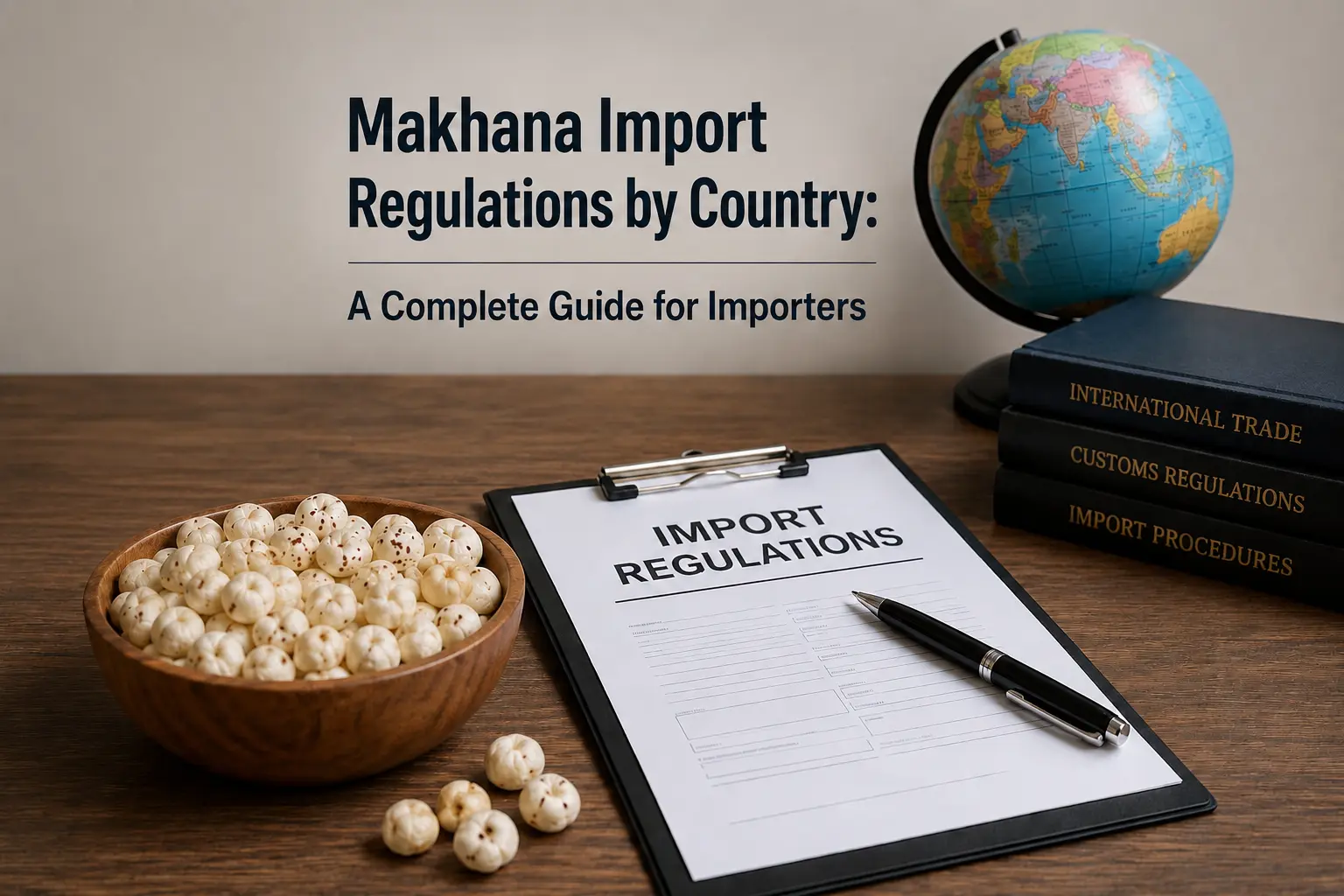
Yes, makhana (fox nuts) can be imported into most major markets, including the USA, Europe, UK, UAE, Australia, and Canada. However, importers must comply with each country's food safety regulations, labeling requirements, packaging standards, customs documentation, and import procedures.
For businesses importing makhana in bulk, understanding country-specific regulations is essential to avoid shipment delays, customs issues, or compliance penalties.
Why Import Regulations Matter for Makhana Businesses
The global demand for makhana has grown rapidly as consumers seek healthy snacks, plant-based foods, and gluten-free alternatives. As a result, retailers, distributors, wholesalers, and private-label brands are increasingly sourcing makhana from India, the world's largest producer.
However, importing food products involves more than simply placing an order. Every country has its own requirements regarding:
- Food safety compliance
- Product labeling
- Packaging standards
- Customs documentation
- Import permits
- Product traceability
Common Documents Required for Makhana Imports
Before looking at country-specific requirements, importers should understand the documents commonly required for international shipments.
Most markets require:
- Commercial Invoice
- Packing List
- Certificate of Origin
- Phytosanitary Certificate (where applicable)
- Bill of Lading or Airway Bill
- Product Specifications
- Food Safety Documentation
- Importer Registration (depending on country)
Having complete documentation helps ensure smoother customs clearance.
Country-Wise Makhana Import Regulations and Compliance Requirements
1. Makhana Import Regulations in the USA
The United States is one of the fastest-growing markets for makhana, driven by increasing demand for healthy snacks, gluten-free foods, and plant-based products. However, businesses importing makhana into the USA must ensure that their products meet various food safety, labeling, and import compliance requirements before entering the market.
Key Compliance Areas
Importers typically need to focus on:
- Food facility registration requirements
- Food safety standards
- Product labeling regulations
- Ingredient disclosure requirements
- Product traceability and recordkeeping
2. Makhana Import Regulations in Europe
Europe has emerged as a major destination for healthy food products, including makhana, due to the region's growing focus on wellness, clean-label foods, and sustainable sourcing. Importers must comply with strict regulations to ensure smooth market entry and long-term business growth.
Key Areas of Compliance
Businesses importing makhana into Europe should pay close attention to:
- Food safety regulations
- Product labeling requirements
- Ingredient transparency standards
- Packaging compliance
- Product traceability systems
Also Read About: Top 10 countries importing Indian makhana
3. Makhana Import Regulations in the United Kingdom
The United Kingdom remains an attractive market for imported healthy snacks and specialty food products. While some regulations are similar to those in Europe, importers should always review UK-specific requirements before shipping products.
Areas Commonly Reviewed
Importers should ensure compliance with:
- Food labeling regulations
- Packaging information requirements
- Import documentation
- Product traceability standards
- Customs declaration procedures
With increasing consumer interest in nutritious and plant-based snacks, the UK continues to offer promising growth opportunities for makhana brands.
4. Makhana Import Regulations in the UAE
The UAE serves as one of the leading food-import hubs in the Middle East and offers excellent opportunities for healthy snack products. As consumer awareness of wellness and nutrition grows, demand for premium makhana products continues to increase.
Common Import Requirements
Importers generally need to ensure:
- Product registration (where applicable)
- Proper product labeling
- Customs documentation
- Compliance with food safety standards
Market Opportunity
Growing demand in the UAE is being driven by products such as:
- Roasted makhana
- Flavored makhana
- Premium healthy snacks
The country's strong retail and distribution network makes it an important destination for makhana exporters.
5. Makhana Import Regulations in Australia
Australia has some of the strictest food import regulations in the world, designed to protect public health and maintain biosecurity standards. Importers must carefully prepare documentation and comply with regulatory requirements before entering the market.
Key Areas Importers Should Consider
Businesses should focus on:
- Food safety compliance
- Product declarations
- Packaging requirements
- Import documentation
- Border inspection procedures
Proper planning and compliance can help reduce customs delays and ensure smoother product clearance.
6. Makhana Import Regulations in Canada
Canada is becoming an increasingly attractive market for healthy snacks, particularly among consumers seeking gluten-free, plant-based, and minimally processed food products. Makhana fits well within these growing consumer trends.
Compliance Focus Areas
Importers should review requirements related to:
- Product labeling
- Food safety standards
- Packaging information
- Customs documentation
- Product traceability
As demand for healthier snack alternatives continues to rise, Canada presents significant opportunities for makhana suppliers, distributors, and private-label brands looking to expand internationally.
Also Read About: Certifications Required for Exporting Makhana
Country-by-Country Comparison
Country | Key Focus Areas |
USA | Food safety, labeling, traceability |
Europe | Labeling, ingredient transparency, compliance |
UK | Customs, food labeling, traceability |
UAE | Product registration, food compliance |
Australia | Biosecurity, food safety, import controls |
Canada | Labeling, packaging, food standards |
Common Challenges Faced by Makhana Importers
Even experienced importers can face challenges when entering new markets.
1. Documentation Errors
Accurate documentation is essential for smooth customs clearance. Even small mistakes or missing paperwork can result in shipment delays, additional inspections, or unexpected costs. Importers should always verify that all required documents are complete and consistent before shipping.
2. Incorrect Labeling
Every country has its own food labeling requirements, and failing to meet them can create compliance issues. Missing information, incorrect declarations, or non-compliant packaging labels may lead to customs objections or product rejection.
3. Packaging Non-Compliance
Packaging standards vary across international markets and often include specific requirements related to food safety, labeling, and material usage. Using packaging that does not meet local regulations can delay product approvals and market entry.
4. Product Classification Issues
Proper product classification is important for customs processing and duty calculations. Incorrect tariff codes or product descriptions can create complications during clearance and may result in additional verification by customs authorities.
5. Supply Chain Delays
International logistics involve multiple stages, including transportation, customs clearance, and local distribution. Delays at any point in the supply chain can impact delivery schedules, inventory planning, and customer commitments, making proactive planning essential for importers.
Why Choosing the Right Supplier Matters
For importers, compliance starts with selecting the right supplier. A reliable exporter can help ensure product consistency, documentation accuracy, and smoother international shipments. This is why many businesses prefer working with experienced suppliers such as Hybite Foods, which focuses on delivering quality makhana, dependable bulk supply solutions, export support, and consistent product standards for global buyers. So, choosing the right partner can significantly reduce operational challenges and help businesses build a more reliable supply chain.
Conclusion
Makhana imports are expanding rapidly as global demand for healthy snacks continues to rise. However, successful importing requires more than finding a supplier—it requires understanding the specific regulations, labeling requirements, documentation standards, and compliance expectations of each destination market. By staying informed about country-specific requirements and partnering with experienced suppliers such as Hybite Foods, importers can reduce risk, improve supply chain efficiency, and build a strong presence in the growing global makhana market.
You Can Also Read More About: Traceability in Makhana Supply Chains
FAQs
1. Can makhana be imported into the USA?
Yes, makhana can be imported into the USA when applicable food safety, labeling, and import requirements are met.
2. Which countries import the most makhana?
The USA, UK, UAE, Canada, Australia, and several European countries are among the growing import markets for makhana.
3. What documents are required to import makhana?
Common documents include a commercial invoice, packing list, certificate of origin, shipping documents, and food-related compliance paperwork.
4. Is a phytosanitary certificate required for makhana imports?
Requirements vary by country and product classification, so importers should verify destination-market regulations.
5. What labeling requirements apply to imported makhana?
Most countries require ingredient information, nutritional details, manufacturer information, and packaging compliance.