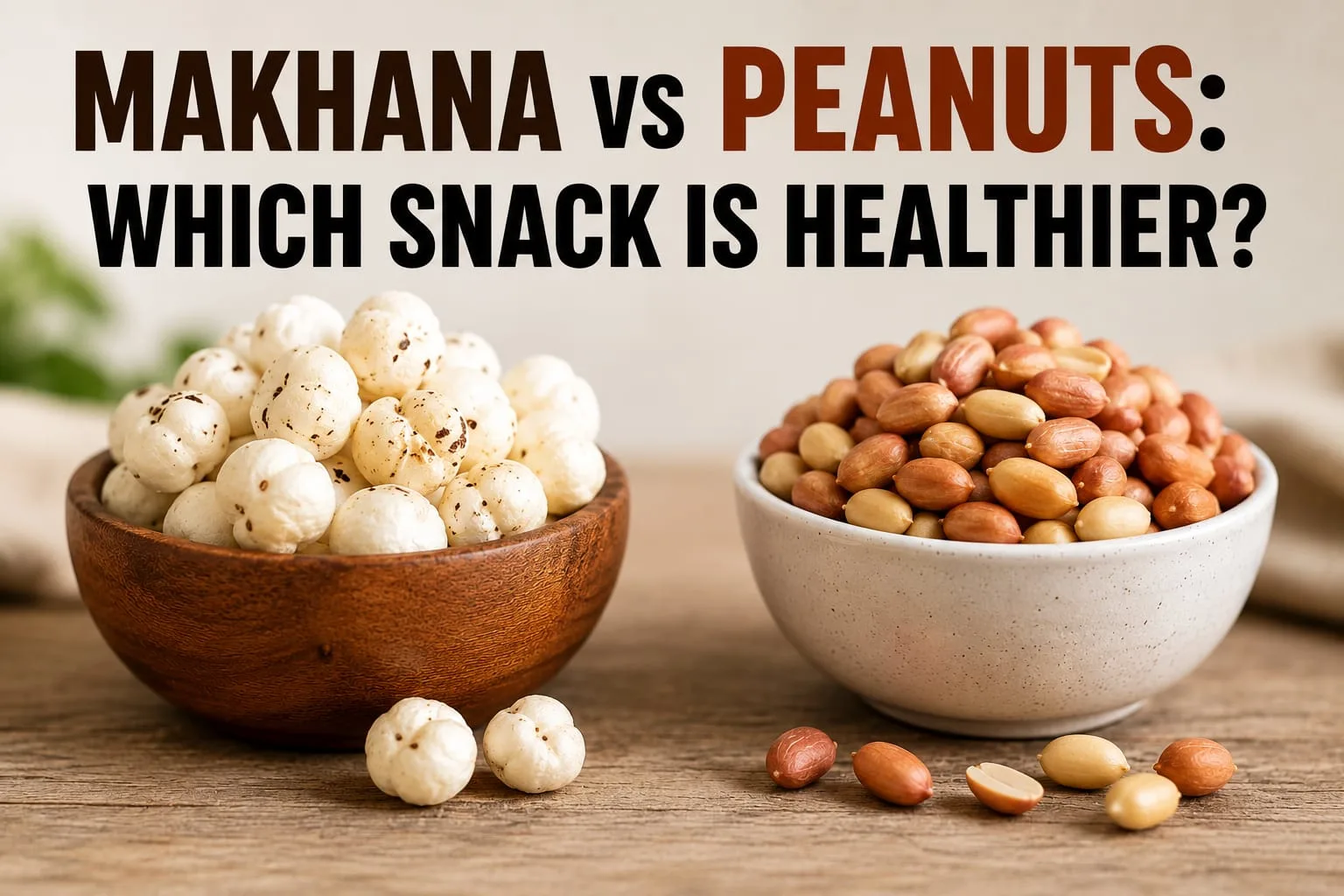
If you're looking for a lighter, lower-fat snack, makhana is generally the healthier choice. It is naturally low in fat, contains fewer calories per serving, and is often preferred by people focused on weight management and clean eating. However, peanuts offer more protein and healthy fats, making them a better option for those seeking higher energy.
The healthier choice ultimately depends on your nutritional goals. For low-calorie snacking, makhana often wins. For protein and healthy fats, peanuts have the advantage.
Why Are People Comparing Makhana and Peanuts?
As healthy snacking becomes more popular, consumers are increasingly searching for alternatives to chips, namkeen, and processed snacks. Two options that frequently appear on shopping lists are makhana (fox nuts) and peanuts.
Both are widely available, affordable, and packed with nutrients. But they differ significantly in calories, protein, fat content, digestibility, and overall nutritional profile.
Makhana vs Peanuts: Nutrition Comparison
The biggest difference between these snacks lies in their nutritional composition.
Nutrient (Per 100g) | Makhana | Peanuts |
Calories | 347 kcal | 567 kcal |
Protein | 9.7 g | 25.8 g |
Carbohydrates | 76.9 g | 16.1 g |
Dietary Fiber | 7.6 g | 8.5 g |
Fat | 0.1–0.5 g | 49.2 g |
Calcium | 60 mg | 92 mg |
Magnesium | 67 mg | 168 mg |
Potassium | 500 mg | 705 mg |
What This Comparison Shows
- Makhana contains significantly less fat.
- Peanuts provide much higher protein.
- Makhana is lower in calories per serving.
- Peanuts contain more minerals and healthy fats.
- Both offer dietary fiber and nutritional benefits.
Breaking Down the Nutrition: What Each Snack Actually Offers
1. Calories and Weight Management
If you're actively trying to lose weight or maintain a calorie deficit, makhana has a clear edge here. A 50-gram serving of makhana sits at around 170 calories, which is quite reasonable for the volume of food you're getting because makhana is light and puffed, you can eat a decent-sized bowlful without going overboard on calories.
Peanuts, on the other hand, are energy-dense. The same 50 grams gives you roughly 280 calories — and let's be honest, most of us don't stop at exactly 50 grams of peanuts. They're addictive in that moreish sort of way.
That said, peanuts aren't inherently bad for weight management. Their fat and protein content makes them genuinely filling, and research consistently shows that people who snack on nuts tend to eat less during subsequent meals. The issue is portion discipline, which is harder with peanuts than with makhana simply because of the calorie density.
Winner for weight loss: Makhana
2. Protein Content
This is where peanuts make a strong case for themselves. With over 25 grams of protein per 100g, peanuts are one of the best plant-based protein sources out there. If you're vegetarian, vegan, or just trying to hit protein targets without eating meat all day, peanuts do some serious work.
Makhana offers around 9–10 grams of protein per 100g — respectable, but nowhere near peanut territory. For someone doing strength training, building muscle, or recovering from exercise, peanuts would be the smarter snack choice from a protein standpoint.
Winner for protein: Peanuts
Also Read About: Makhana vs Other Indian Superfoods
3. Fat Quality
Here's where a lot of people get confused. Peanuts are high in fat — but it's largely the good kind. Around 80% of the fat in peanuts is unsaturated, including monounsaturated fats (similar to what you find in olive oil) and polyunsaturated fats. These fats actively support heart health, help manage LDL cholesterol, and have anti-inflammatory properties.
So calling peanuts "fattening" without context is a bit misleading. The fats in peanuts are beneficial when consumed in reasonable amounts. The problem is "reasonable amounts" is genuinely difficult when you're snacking mindlessly in front of a screen.
Makhana, with negligible fat content, is essentially neutral on this front — good for people on low-fat diets or those managing certain health conditions, but it doesn't offer the same heart-healthy fat benefits that peanuts do.
Winner for fat quality: Peanuts (when eaten in moderation)
4. Glycemic Index and Blood Sugar
This one matters a lot for diabetics and for anyone trying to avoid the mid-afternoon energy crash.
Makhana has a low glycemic index (GI) — meaning it releases glucose into the bloodstream slowly and steadily. This prevents the spike-and-crash cycle that comes from high-GI foods. It also means makhana is a sensible snack option for people with Type 2 diabetes or insulin sensitivity issues.
Peanuts also have a low glycemic index, actually one of the lowest among common snack foods. Their combination of fat, protein, and fiber slows digestion significantly, keeping blood sugar stable for longer periods.
Both snacks perform well here, but makhana has the added advantage of being low in fat too — making it an easier recommendation from a diabetes management perspective.
Winner for blood sugar control: Tie (with a slight edge to makhana for diabetics)
5. Digestive Health
Both makhana and peanuts are solid sources of dietary fiber, which is essential for gut health, regular bowel movements, and feeding the beneficial bacteria in your digestive system.
Makhana edges ahead here with roughly 14–15 grams of fiber per 100g, compared to about 8.5 grams in peanuts. That's a significant difference. Higher fiber intake is linked with lower risk of colorectal cancer, better cholesterol management, improved satiety, and a healthier gut microbiome overall.
For people dealing with digestive issues, bloating, or trying to improve gut health, makhana is the gentler, higher-fiber option.
Winner for digestive health: Makhana
6. Micronutrients and Minerals
Makhana is surprisingly rich in minerals that many people are quietly deficient in. It contains meaningful amounts of calcium (important for bone density, especially for women), potassium (essential for heart function and blood pressure regulation), magnesium, and iron. It also contains kaempferol — an antioxidant compound associated with anti-aging and anti-inflammatory properties.
Peanuts bring their own micronutrient punch: they're rich in niacin (Vitamin B3), folate, Vitamin E, and magnesium. The niacin content in peanuts is particularly notable — it plays a role in brain health and has been studied in the context of cognitive function.
Both snacks are nutritionally dense beyond their macros, but in different ways.
Winner for micronutrients: Tie (depends on which minerals/vitamins matter most to you)
7. Allergen Considerations
This one's important and often overlooked in comparison articles. Peanut allergy is one of the most common and severe food allergies in the world. For children especially, accidental peanut exposure can be life-threatening.
Makhana carries no such risk. It's a seed, not a nut, and is considered safe for people with tree nut and peanut allergies. If you're snacking in a home with young children or someone with nut allergies, makhana is the clearly safer option.
Winner for allergy safety: Makhana
Who Should Eat What?
There's no universal "better" snack here — it genuinely depends on your situation.
Choose makhana if you're:
- Trying to lose weight or reduce calorie intake
- Managing diabetes or blood sugar
- Looking for a low-fat, high-fiber snack
- Prone to overeating salty, crunchy things
- Avoiding allergens in your household
- Fasting (makhana is widely consumed during Indian religious fasts)
Choose peanuts if you're:
- Looking to increase protein intake
- Active, exercising, or building muscle
- Following a high-fat/low-carb (keto) diet
- Needing sustained energy over several hours
- Budget-conscious (peanuts are significantly cheaper per gram of protein)
And honestly? You don't have to choose just one. A small mix of both — maybe roasted makhana as your primary snack with a small portion of peanuts a few times a week — gives you the best of both worlds.
The Final Verdict
If you're purely asking about which snack supports overall health with fewer risks and fewer calories — makhana wins this comparison. It's lower in calories, higher in fiber, easier on blood sugar, and safe for more people.
On the other hand if protein is your priority and you eat mindfully, peanuts are a nutritional powerhouse that absolutely deserve a spot in your diet.
The bigger takeaway is this: both of these snacks beat chips, cookies, and processed crackers without even trying. The fact that you're choosing between makhana and peanuts means you're already making good decisions.
You Can Also Read More About: Makhana Nutrition Facts
FAQs
Q1. Is makhana better than peanuts for weight loss?
Yes, makhana is the better choice for weight loss. It contains around 170 calories per 50g compared to roughly 280 calories in the same quantity of peanuts. Makhana is also very low in fat and high in dietary fiber, which helps you feel full without overeating.
Q2. Which has more protein — makhana or peanuts?
Peanuts have significantly more protein. Per 100 grams, peanuts provide around 25–26 grams of protein, while makhana offers approximately 9–10 grams. If your goal is muscle building or hitting daily protein targets, peanuts are the stronger option.
Q3. Can diabetics eat makhana?
Yes, makhana is a diabetic-friendly snack. It has a low glycemic index, meaning it releases glucose slowly into the bloodstream without causing sudden spikes. It's also low in fat and high in fiber, both of which support better blood sugar management.
Q4. Is it okay to eat makhana every day?
Yes, makhana is safe to eat daily in moderate quantities. A serving of 20–30 grams per day is ideal. Regular consumption supports bone health, aids digestion, helps manage blood pressure, and assists with weight management.
Q5. Can I eat makhana during fasting (vrat)?
Yes, makhana is one of the most popular fasting foods in India, widely consumed during Navratri, Ekadashi, and Shivratri. It's sattvic, easy on the stomach, and filling enough to keep you energized through the day.
Q6. Which is better for heart health — makhana or peanuts?
Both are good for the heart but in different ways. Peanuts are rich in healthy unsaturated fats that help reduce bad cholesterol. Makhana contains potassium and magnesium which help regulate blood pressure. Eating both in moderation is ideal.