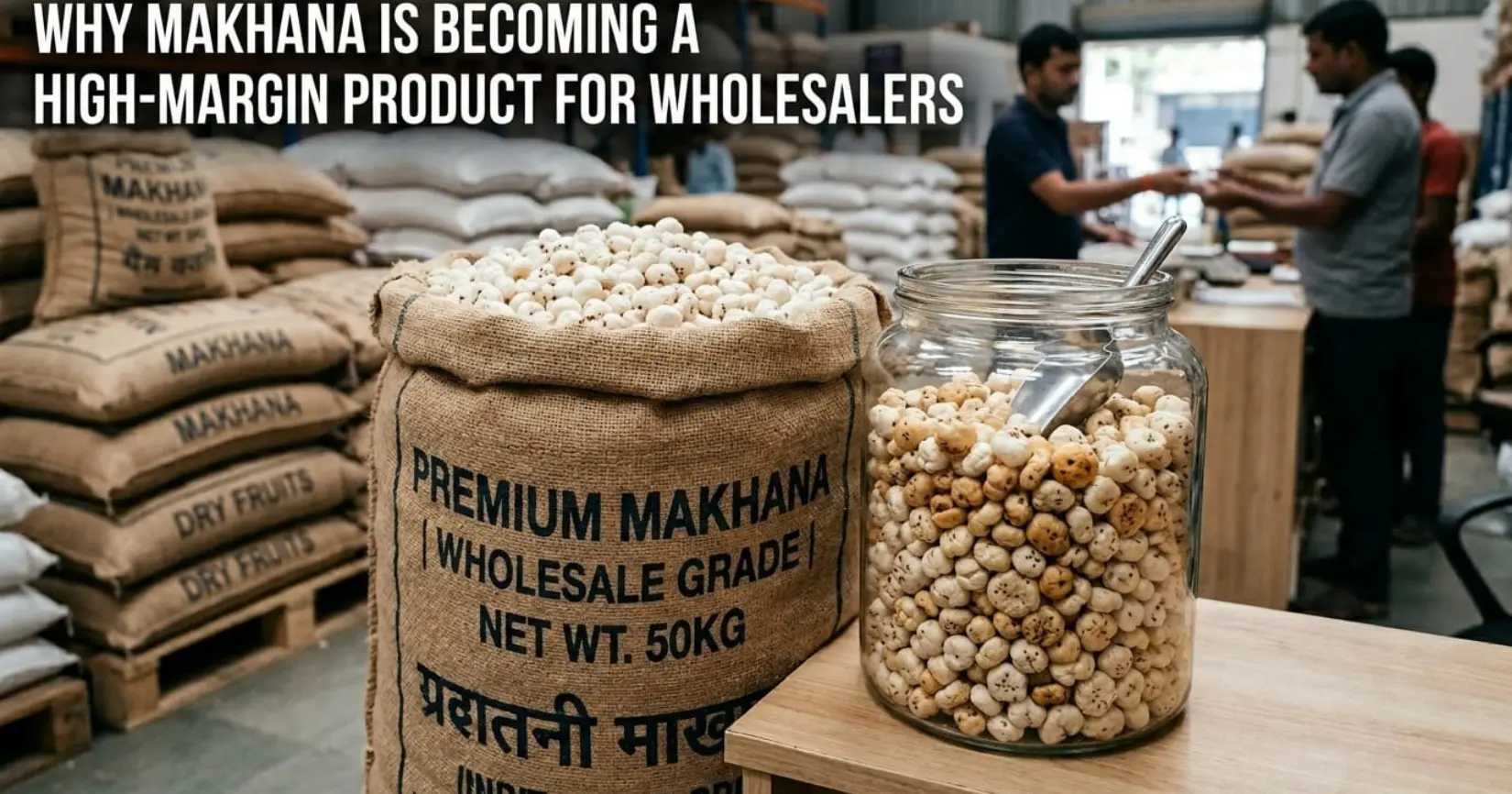
Makhana is becoming a high-margin product for wholesalers because of its growing global demand, premium market positioning, increasing popularity as a healthy snack, and relatively strong value addition opportunities through grading, flavoring, packaging, and private labeling. As consumers shift toward nutritious and clean-label foods, wholesalers are finding makhana to be a profitable product across retail, export, and food service channels.
Why Is Makhana Attracting So Much Attention in the Wholesale Market?
Makhana has evolved from a traditional Indian snack into a popular health food with growing demand in both domestic and international markets. As consumers increasingly look for natural, gluten-free, and minimally processed snack options, makhana has gained strong acceptance among health-conscious buyers.
For wholesalers, this rising demand creates significant opportunities for business growth, higher sales volumes, and better profit margins compared to many traditional snack products.
What Makes Makhana a High-Margin Product?
Unlike many commodity food products that compete primarily on price, makhana has positioned itself as a premium healthy snack. This allows wholesalers to operate with stronger margins while serving a rapidly expanding customer base.
1. Premium Market Positioning
Makhana is widely marketed as a healthy snack, superfood, and clean-label food product. Consumers often associate it with wellness, fitness, and premium nutrition, so because of this positioning, buyers are generally willing to pay higher prices compared to traditional snacks.
Key Advantages
- Premium product perception
- Growing health-conscious customer base
- Better retail pricing potential
- Strong demand in urban markets
This premium image helps wholesalers maintain healthier margins throughout the supply chain.
2. Rising Demand for Healthy Snacks
The healthy snacking category continues to grow worldwide. Consumers are increasingly replacing fried and heavily processed snacks with alternatives that align with modern dietary preferences.
Makhana benefits from several trends:
- Healthy snacking
- Plant-based eating
- Gluten-free foods
- Fitness nutrition
- Clean-label products
As demand increases, wholesalers gain access to a larger customer base while maintaining attractive pricing structures.
3. Strong Opportunities in Value Addition
One of the biggest reasons makhana delivers better margins is its flexibility for value addition. Raw makhana can be transformed into multiple premium products through processing, flavoring, and packaging.
Popular value-added products include:
Each layer of value addition creates opportunities for higher selling prices and improved profitability.
4. Growing Private Label Demand
Private-label snacks have become a major growth segment for retailers and e-commerce brands. Many businesses want to launch their own snack brands without investing in manufacturing facilities. This creates opportunities for wholesalers supplying bulk makhana to private-label companies.
Why Private Label Is Attractive
- Higher order volumes
- Long-term supply agreements
- Better business stability
- Additional packaging revenue
Private-label partnerships often provide more predictable revenue streams compared to traditional wholesale transactions.
How Export Demand Is Increasing Wholesale Opportunities
International demand for makhana has expanded significantly in recent years. Importers, distributors, and retailers in several countries are actively sourcing Indian makhana.
Major Growth Markets
- United States
- Canada
- United Kingdom
- Germany
- Australia
- UAE
- Singapore
This growing international demand creates additional opportunities for wholesalers serving export-focused customers.
How Packaging Increases Wholesale Margins
Packaging is no longer just a protective requirement. It has become a major driver of product value.
Consumers increasingly expect:
- Attractive packaging
- Resealable pouches
- Retail-ready presentation
- Premium branding
Benefits of Better Packaging
- Higher perceived value
- Improved shelf appeal
- Better customer trust
- Increased retail pricing potential
Wholesalers who offer packaging solutions often create additional revenue streams while improving overall profitability.
Why Makhana Works Well Across Multiple Sales Channels
One reason wholesalers favor makhana is its versatility. The product can be sold through multiple channels simultaneously.
Popular Distribution Channels
- Retail stores
- Supermarkets
- Health food shops
- E-commerce platforms
- Food service businesses
- Cloud kitchens
- Export markets
- Private-label brands
Diversified demand helps reduce dependence on any single customer segment.
How Wholesalers Can Maximize Profit Margins
Successful wholesalers focus on more than just buying and selling. They look for opportunities to create additional value throughout the supply chain.
Strategies That Improve Profitability
- Source quality grades consistently
- Offer multiple packaging options
- Add flavored variants
- Target export buyers
- Serve private-label customers
- Maintain inventory during peak demand periods
- Build relationships with long-term buyers
These strategies help improve margins while strengthening market position.
Also Read About: How to Scale Your Makhana Business
Choosing the Right Makhana Supplier
The success of a wholesale business often depends on the quality and reliability of its supplier.
A dependable supplier helps ensure:
- Consistent product quality
- Reliable bulk supply
- Better inventory planning
- Export-ready products
- Packaging support
- Long-term business stability
Businesses looking to capitalize on the growing makhana market often prefer working with experienced suppliers such as Hybite Foods, which supports wholesalers, distributors, retailers, exporters, and private-label brands with quality makhana products and dependable bulk supply solutions.
Conclusion
Makhana is no longer just a traditional snack—it has evolved into a premium product category with strong demand across retail, wholesale, private-label, food service, and export markets.
Its combination of growing consumer demand, premium positioning, value-addition opportunities, and international market expansion makes it an attractive high-margin product for wholesalers. As the healthy snacking industry continues to grow, businesses that invest in quality sourcing, effective packaging, and reliable supply partnerships will be well-positioned to capture this opportunity.
You Can Also Read More About: Profit Margin Makhana Business
FAQs
1. Why is makhana considered a high-margin product?
Makhana offers premium pricing opportunities due to its healthy image, growing demand, and value-added product possibilities.
2. Is the wholesale makhana business profitable?
Yes, many wholesalers find makhana profitable because of increasing consumer demand and opportunities in retail, export, and private-label markets.
3. Which makhana grades offer the best margins?
Premium grades with larger size, better appearance, and higher crispness generally command higher selling prices.
4. Does flavored makhana generate better profits?
Yes, flavored makhana often sells at higher prices than plain makhana due to additional value addition.
5. Can wholesalers sell makhana under private labels?
Yes, private-label manufacturing is one of the fastest-growing opportunities in the makhana industry.