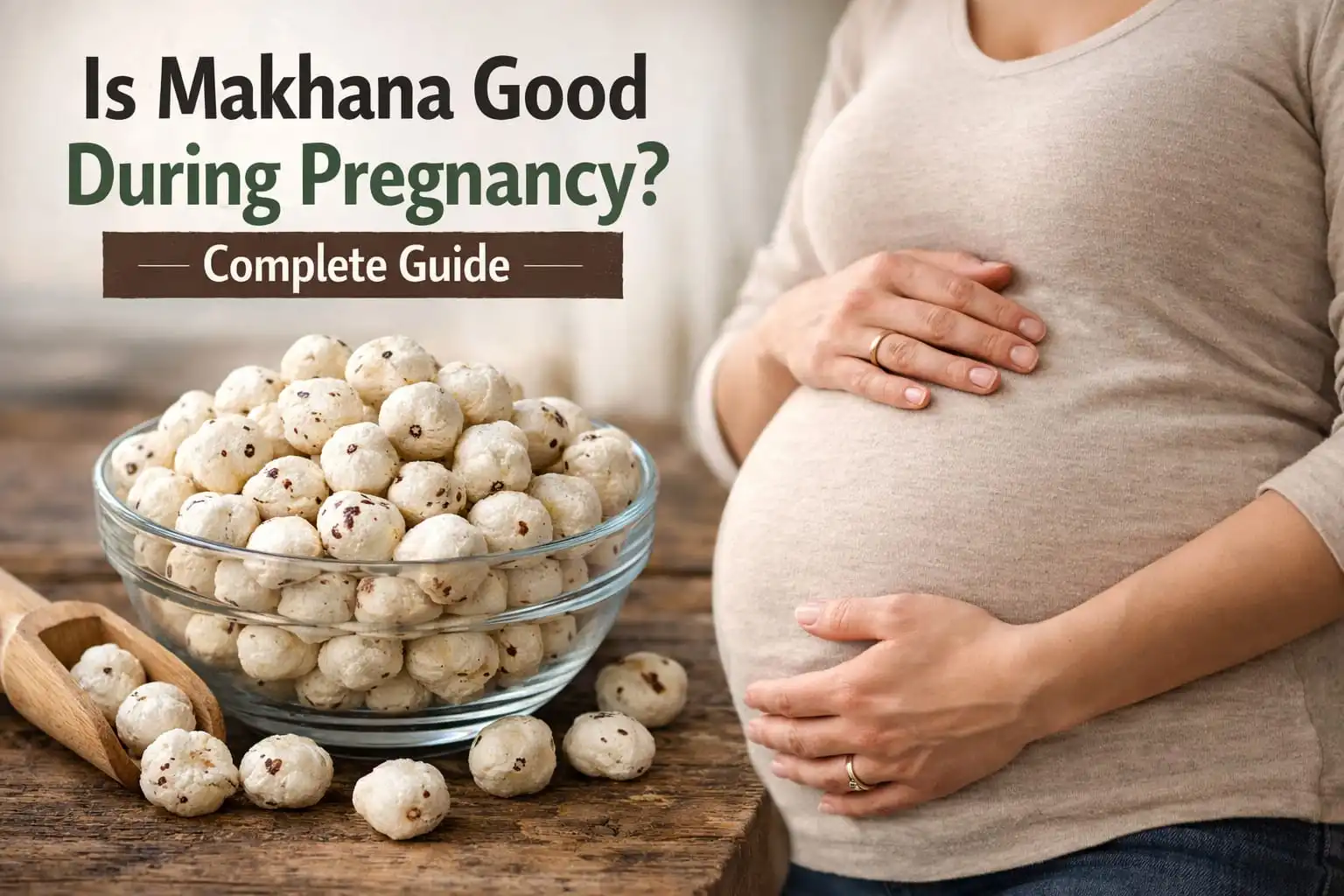
Pregnancy is a time when every food choice matters. From fruits and vegetables to everyday snacks, expecting mothers often wonder whether what they eat is safe and beneficial for their baby. One common question many women ask is: Is makhana good during pregnancy?
The simple answer is yes — makhana can be a healthy and safe snack during pregnancy when eaten in moderation. Makhana is rich in important nutrients like calcium, protein, magnesium, and antioxidants, making it a nutritious option for pregnant women and pregnancy often comes with cravings, fatigue, and digestive issues, healthy snacks become even more important. This is where makhana stands out — it is light, nutritious, easy to digest, and far healthier than processed snacks.
In this complete guide, we’ll find makhana benefits during pregnancy, the right quantity to eat, possible side effects, and the best ways to include it in your pregnancy diet.
Can Pregnant Women Eat Makhana?
Yes, pregnant women can eat makhana as part of a balanced diet. It is considered a nutrient-dense snack that offers multiple health benefits for both the mother and their baby.
Makhana contains:
- Protein
- Calcium
- Iron
- Magnesium
- Phosphorus
- Antioxidants
These nutrients support the changing nutritional needs during pregnancy. Since makhana is light and naturally low in unhealthy fats, it can help to satisfy cravings without adding unnecessary calories.
Benefits of Eating Makhana During Pregnancy
Makhana is not just a light snack — it offers several health benefits during pregnancy. Let’s look at why it can be a good addition to your daily pregnancy diet.
1. Supports Baby’s Bone Development
During pregnancy, your body needs more calcium because the growing baby depends on it for proper bone and skeletal development. If your diet lacks enough calcium, the body may start using your own calcium reserves, which can affect your bone strength over time. Including calcium-rich foods like makhana can help support both the mother and the baby during this phase.
How makhana helps:
- Supports healthy bone growth in the baby
- Helps maintain bone strength for the mother
- Contributes to better muscle support
2. Helps in Managing Pregnancy Cravings
Cravings are a natural part of pregnancy, and many women feel the urge to snack frequently throughout the day. The challenge is choosing snacks that are satisfying but not unhealthy. This is where makhana becomes a smart option — it is light, filling, and much healthier compared to fried or processed foods.
Why makhana is a better snack:
- Light and easy to eat anytime
- Keeps you full for longer
- Low in unhealthy fats
Instead of eating chips or sweets, a bowl of roasted makhana can satisfy cravings in a healthier way.
3. Supports Healthy Digestion
Digestive issues like bloating and constipation are quite common during pregnancy due to hormonal changes. Eating foods that support digestion can make a big difference in daily comfort. Makhana contains dietary fiber, which helps improve digestion and keeps the digestive system functioning smoothly.
Digestive benefits of makhana:
- Promotes regular bowel movement
- Helps reduce constipation
- Supports overall gut health
This makes makhana a gentle and pregnancy-friendly snack.
4. Provides Sustained Energy
Feeling tired or low on energy is common during pregnancy, especially between meals. Snacks that provide steady energy without being too heavy are important for maintaining daily activity levels. Makhana contains healthy carbohydrates that release energy gradually, helping you stay active without sudden spikes or crashes.
Energy benefits of makhana:
- Provides steady energy throughout the day
- Helps reduce fatigue
- Keeps you feeling full between meals
This makes it a useful snack option during busy or tiring days.
5. Rich in Antioxidants
Makhana is also a source of antioxidants, which help protect the body from oxidative stress. During pregnancy, maintaining overall health and immunity becomes even more important. These antioxidants support general wellness and contribute to better nutrition.
Benefits of antioxidants in makhana:
- Support overall maternal health
- Help improve immunity
- Provide cellular protection
They are not a replacement for a balanced diet, they do add extra nutritional value.
6. Helps Control Unhealthy Weight Gain
Weight gain is expected during pregnancy, but excessive intake of high-calorie snacks can lead to unhealthy weight gain. Choosing lighter snack options can help maintain better balance. Makhana is naturally low in calories and unhealthy fats, making it a better choice compared to fried snacks.
Why makhana helps manage weight:
- Low in calories
- Low in unhealthy fats
- Keeps you full for longer
This makes it a smarter and more practical snack option during pregnancy.
How Much Makhana Can You Eat During Pregnancy?
A common question is: How much makhana should a pregnant woman eat daily?
A moderate portion of one small bowl (25–30 grams) per day is generally enough.
This amount can:
- Provide nutrients
- Help control cravings
- Prevent overeating
Overeating should be avoided, even with healthy snacks.
You Can Also Read More About: How Much Makhana Should You Eat Daily? (Expert Guide)
Is Makhana Safe in Every Trimester?
Makhana is generally considered safe to eat throughout pregnancy, as long as it is consumed in moderate amounts and prepared in a simple, healthy way because it is light, easy to digest, and nutrient-rich, it can fit well into different stages of pregnancy. However, the body’s needs change in each trimester, so its role in your diet may vary slightly.
First Trimester:
This is the stage when many women experience nausea, low appetite, or digestive sensitivity. Light and simple foods work best during this phase, and makhana can be a good option.
- Helps with light snacking without feeling heavy
- Easy to digest, especially when roasted
- Can be consumed in small portions during nausea
Second Trimester:
During this phase, nutritional needs increase as the baby grows more rapidly. This is the time to focus on balanced nutrition and consistent energy intake.
- Supports increasing nutrient requirements
- Provides light energy between meals
- Helps maintain a balanced snacking routine
Third Trimester:
In the final stage of pregnancy, cravings and hunger levels often increase. At the same time, digestion can slow down, so lighter snacks are more comfortable.
- Helps manage frequent cravings
- Provides steady energy without heaviness
- Acts as a better alternative to fried snacks
That’s why makhana is safe across all trimesters, every pregnancy is different. It’s always a good idea to consult a healthcare professional to make sure it fits well with your individual dietary needs.
Possible Side Effects of Makhana During Pregnancy
Makhana is usually safe, but overeating may cause discomfort.
Possible issues:
- Bloating
- Constipation
- Digestive heaviness
These are usually linked to eating too much at once.
To avoid this:
- Stick to moderate portions
- Drink enough water
- Avoid heavy seasoning
Which Makhana Is Best During Pregnancy?
When it comes to pregnancy, quality matters just as much as the food itself. While makhana is generally a healthy snack, choosing the right type ensures you get the benefits without unnecessary additives or risks. The safest and most recommended option is plain roasted makhana that is prepared with minimal oil and without heavy seasoning. Keeping it simple helps maintain its natural nutritional value and makes it easier on digestion.
What to Look for in Good Quality Makhana:
- Clean and free from dust or impurities
- Fresh, with no stale smell or discoloration
- Properly processed and well-roasted
- Free from artificial flavors, preservatives, or excess salt
You can also consider sourcing from trusted brands like Hybite Foods, which focus on quality and hygienic processing.
Conclusion
So, makhana can be a simple and nutritious addition to a pregnancy diet when chosen and consumed wisely. Its light nature, essential nutrients, and easy digestibility make it a practical snack option during this phase. The key is to focus on quality, keep portions balanced, and stick to simple preparation methods for the best results.
You Can Also Read More About: Makhana for PCOD and hormonal health — what the research says
FAQs
1. Can I eat makhana daily during pregnancy?
Yes, you can eat makhana daily in moderate amounts as part of a balanced diet.
2. How much makhana is safe during pregnancy?
Around one small bowl (25–30 grams) per day is generally considered safe.
3. Is roasted makhana better than raw during pregnancy?
Yes, roasted makhana is easier to digest and safer to consume.
4. Is makhana good for the baby’s development?
It contains nutrients like calcium and protein that support growth and development.
5. Can makhana cause any side effects during pregnancy?
Overeating may lead to bloating or digestive discomfort.
6. Is makhana safe in the first trimester?
Yes, it is light and easy to digest, making it suitable for early pregnancy.