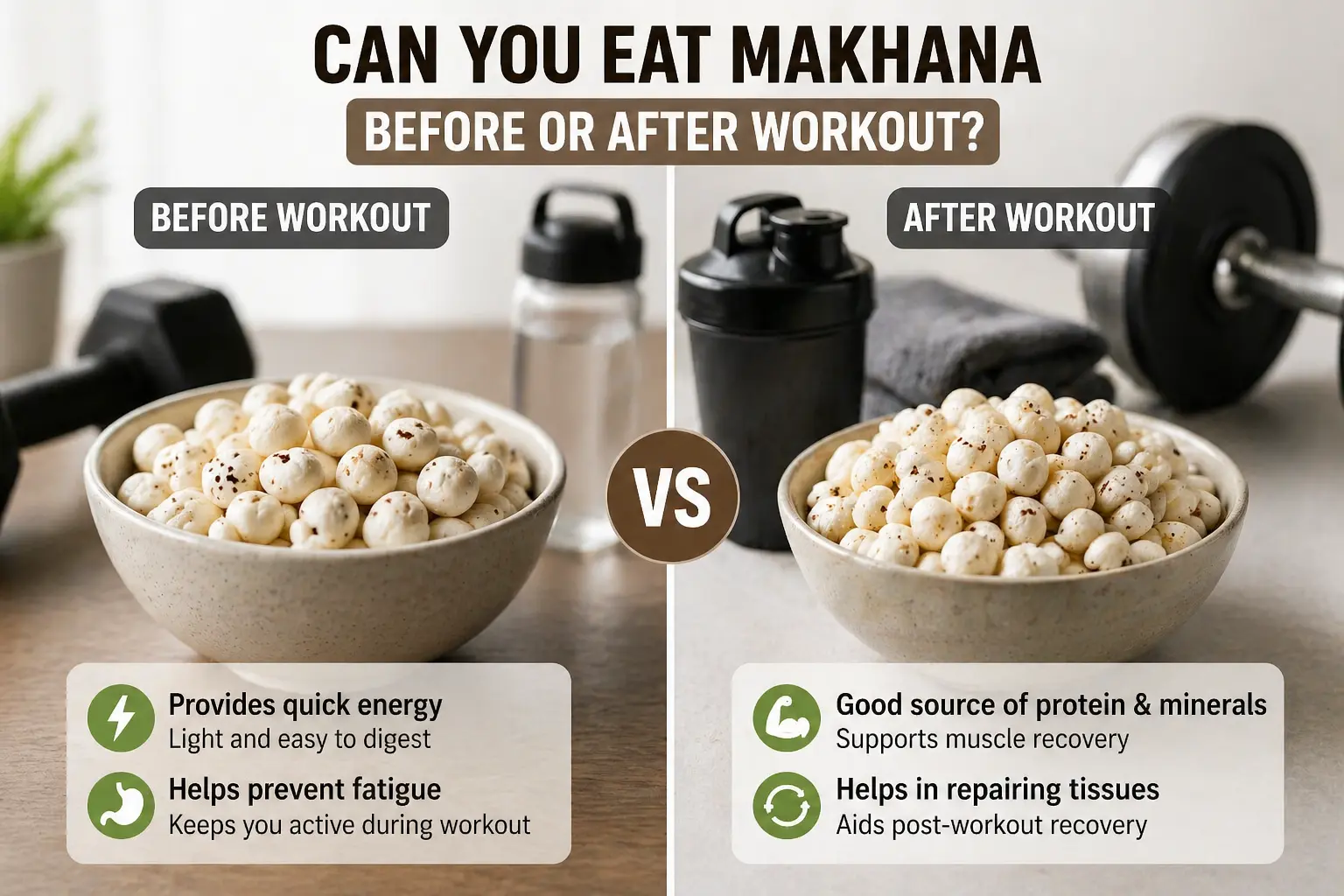
When it comes to fitness, what you eat around your workout matters just as much as the workout itself. Pre-workout and post-workout nutrition directly impact your energy, performance, recovery, and even results over time. One snack that’s getting a lot of attention lately is makhana (fox nuts). It’s light, crunchy, and often marketed as a healthy alternative to processed snacks, but the real question is:
Can you eat makhana before or after a workout? And which timing is actually better?
Let’s break it down in a practical way so you can use it effectively in your routine.
What Makes Makhana a Good Fitness Snack?
Before deciding when to eat it, it’s important to understand what makhana actually offers from a nutrition perspective.
Makhana is:
- Low in fat
- Rich in carbohydrates
- Contains moderate protein
- Easy to digest
- Light on the stomach
This combination makes it suitable for both pre-workout energy and post-workout recovery support, depending on how you use it.
Can You Eat Makhana Before Workout?
Yes, makhana can work well as a pre-workout snack — especially if you prefer something light that won’t make you feel heavy during exercise.
Why It Works Before a Workout
Before a workout, your body needs quick but steady energy, not something too heavy or greasy.
Makhana provides:
- Complex carbohydrates for sustained energy
- Light digestion (no heaviness during workouts)
- A quick snack option when you’re short on time
When to Eat It
- 30 to 45 minutes before your workout
This gives your body enough time to digest and convert it into usable energy.
Best Way to Eat Before Workout
Keep it simple and light:
- Dry roasted makhana
- Lightly salted makhana
- Small portion (1 handful or ~20–30 grams)
Avoid adding too much oil or butter before workouts, as it can slow digestion.
Can You Eat Makhana After Workout?
Yes — but with a small adjustment.
After a workout, your body is in recovery mode. It needs the right mix of nutrients to repair muscles, restore energy, and reduce fatigue. While makhana is light and easy to digest, it mainly provides carbohydrates, which help replenish energy levels. However, it is not very high in protein — and protein is essential after exercise for muscle recovery.
Why It Works After a Workout
After exercise, your body needs:
- Energy replenishment (carbs)
- Muscle repair (protein)
Makhana helps with:
- Replenishing energy through carbohydrates
- Providing light nutrition without overloading the stomach
But since it’s not very high in protein, pairing is important.
How to eat it after a workout:
- Makhana with milk: A simple and effective option for adding protein
- Makhana with yogurt (curd): Supports digestion and recovery
- Makhana with nuts (almonds, peanuts): Adds healthy fats and protein
- Lightly roasted makhana: Keeps it easy to digest
Pre-Workout vs Post-Workout: Which Is Better?
Factor | Pre-Workout (Before Exercise) | Post-Workout (After Exercise) |
Main Goal | Provide energy for performance | Support recovery and muscle repair |
Role of Makhana | Acts as a light energy source | Helps restore energy (needs protein pairing) |
Nutritional Focus | Carbohydrates for fuel | Carbs + protein for recovery |
Best Way to Eat | Dry roasted, light, plain | With milk, yogurt, or nuts |
Portion Size | Small (20–30 grams) | Moderate (20–30 grams + protein) |
Digestion | Should be quick and light | Should support recovery without heaviness |
When to Eat | 30–45 minutes before workout | Within 30–60 minutes after workout |
Effect on Performance | Improves stamina and energy | Helps reduce fatigue and muscle soreness |
Common Mistake | Eating too much or too heavy | Eating without protein |
Best For | Energy boost | Recovery and repair |
Does Makhana Help in Muscle Building?
Makhana is often seen as a healthy snack, but when it comes to muscle building, it’s important to understand its real role. It does not directly build muscle like high-protein foods do, but it supports the overall process in a practical way. Makhana mainly provides clean energy and light nutrition, which helps you stay consistent with your diet and workouts.
How makhana supports muscle building:
- Provides energy for workouts
- Helps maintain overall calorie balance
- Supports better and cleaner eating habits
However, for actual muscle growth, your body needs more than just light snacks.
What you still need for muscle gain:
- High-protein foods (like eggs, dairy, lentils, or protein shakes)
- Strength training and resistance workouts
- A consistent and well-balanced diet
In simple terms, makhana helps you stay on track, but it’s not a replacement for protein-rich foods. Think of it as a support snack that complements your fitness routine rather than a primary muscle-building food.
Common Mistakes to Avoid When Using Makhana for Fitness
Makhana is a smart snack, but small mistakes in how you use it can reduce its benefits. If your goal is better performance, recovery, or weight management, it’s important to keep things balanced and practical.
Here are 5 common mistakes to avoid:
1. Eating too much at once
Overeating makhana can lead to unnecessary calorie intake and even digestive discomfort.
2. Using too much oil, butter, or ghee
This turns a light snack into a heavy, calorie-dense food that may not suit your fitness goals.
3. Relying only on makhana after workouts
It lacks sufficient protein, so skipping protein sources can slow down recovery.
4. Ignoring portion control
Even healthy snacks need balance. Stick to moderate servings.
5. Choosing flavored or processed variants
Packaged makhana with artificial flavors and excess salt reduces its health value.
Conclusion
Makhana is one of those rare snacks that fits easily into almost any fitness routine. If you eat it before a workout for light energy or after a workout for recovery support, it works best when used with the right approach. The key is simple — keep it light before workouts, and combine it with protein after workouts.
It’s not a magic food, but it’s a smart upgrade from processed snacks. If you’re planning to include makhana regularly, choosing a reliable and quality-focused brand like Hybite Foods ensures better taste, consistency, and overall experience.
You Can Also Read More About: Makhana for Skin Glow: Does It Actually Work?
FAQs
1. Can I eat makhana before workout?
Yes, makhana is a good pre-workout snack as it provides light and steady energy without feeling heavy.
2. Is makhana good after workout?
Yes, but it should be combined with a protein source like milk, curd, or nuts for better recovery.
3. Can makhana help in muscle gain?
Indirectly, yes — but you still need protein-rich foods and proper training for muscle growth.
4. Can I eat makhana daily for workouts?
Yes, it can be included daily in moderate amounts as part of a balanced diet.
5. What is the best time to eat makhana for gym?
30–45 minutes before workout or within 30–60 minutes after workout is the best time to eat makhana for gym people.
6. Is roasted makhana better for fitness?
Yes, dry roasted makhana is the best option as it avoids unnecessary fats.