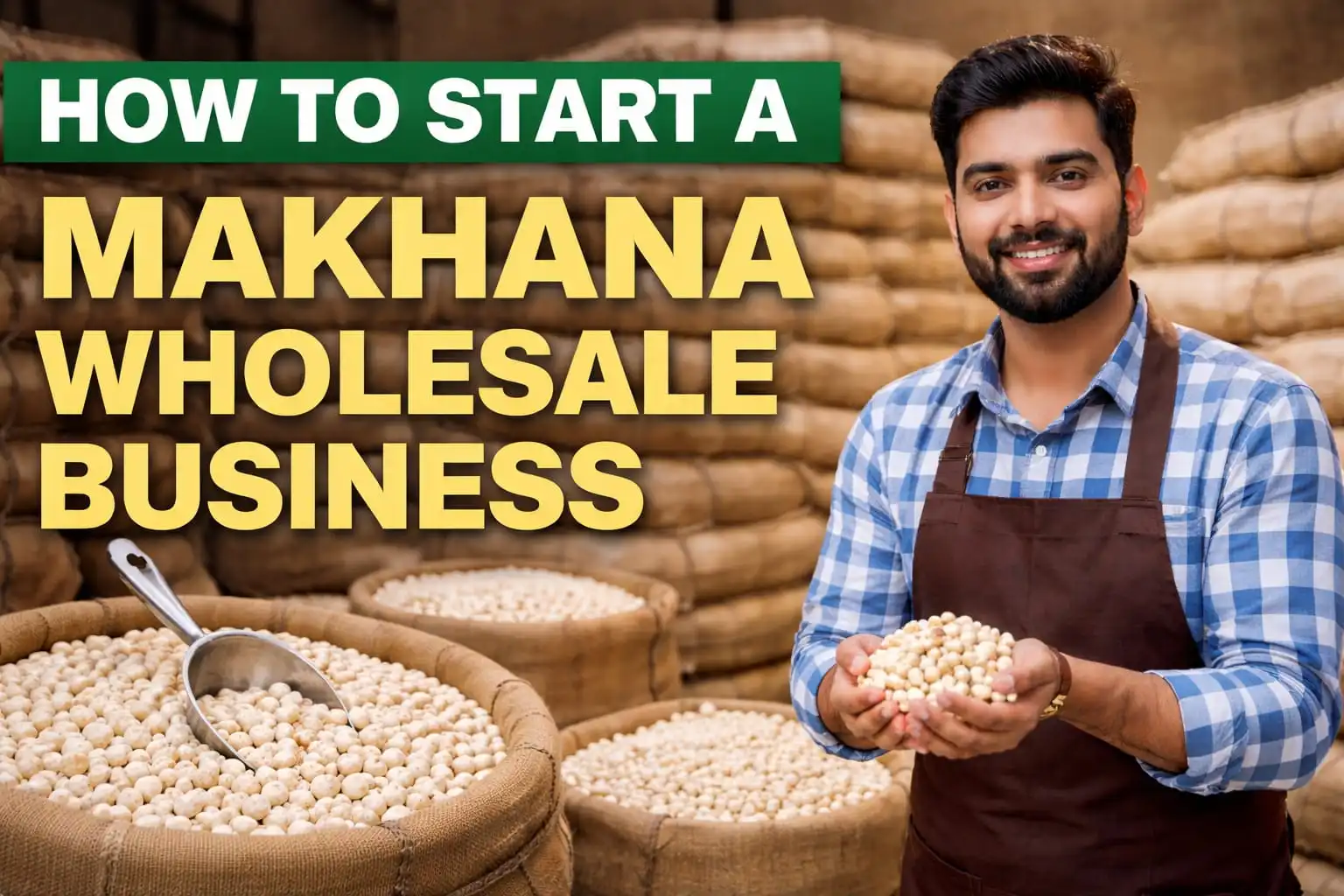
The makhana market is growing fast across India and international markets. What was once a simple, locally consumed snack is now being picked up by modern retail, online brands, and international buyers. With the rise of health-conscious consumers, makhana has carved out its place as a reliable product in the growing healthy snacks category.
For anyone looking to enter the food trading space, a makhana wholesale business offers a practical starting point. You don’t need heavy machinery or complex setups — the focus is more on sourcing, quality control, and building a strong buyer network. With the right approach, it can be scaled steadily over time.
In this guide, you’ll learn how to start a makhana wholesale business, step by step — from sourcing to selling, along with practical tips to help you grow faster.
Step-by-Step Guide to Starting a Makhana Wholesale Business
Step 1: Understand the Makhana Market
Before starting, it’s important to get a clear picture of how the makhana market actually works. The supply chain is quite structured — from farming to processing and then distribution. Most of the production happens in Bihar, after which makhana is cleaned, graded, and supplied to wholesalers and traders across the country and abroad. As a wholesaler, your role sits in the middle of this chain, so understanding demand, pricing, and buyer expectations is essential before investing.
Your role as a wholesaler:
- Source makhana in bulk
- Maintain quality consistency
- Supply to retailers, brands, or exporters
What you should study:
- Current makhana price trends
- Demand for raw vs roasted vs flavored makhana
- Your target customers (retailers, exporters, online sellers)
Read about Makhana Market Trends 2026
Step 2: Choose Your Business Model
Once you understand the market, the next step is to decide how you want to operate. A clear business model helps you stay focused and avoid unnecessary confusion in the beginning. You don’t need to do everything at once — starting with one segment is usually the smarter approach.
There are multiple ways to run a makhana wholesale business depending on your budget and target market.
Common wholesale models:
- Raw makhana supply (to processors and manufacturers)
- Roasted makhana wholesale (to retailers)
- Bulk supply for private label brands
- Export-focused wholesale business
If you’re just starting out, begin with a simple model and expand as you gain experience.
Step 3: Source Quality Makhana
Sourcing is one of the most important part of your business. The quality you supply will directly impact your reputation and repeat orders. Even one poor quality batch can affect long-term relationships with buyers. You should always focus on building reliable supply sources instead of just chasing the lowest price and always choose best makhana manufacturer in India so that a good quality will maintain.
Where you can source from:
- Farmers and local mandis
- Processing units
- Bulk suppliers
Working with trusted suppliers like Hybite Foods can help ensure consistent quality, proper grading, and reliable bulk supply.
What to check before buying:
- Size and grading
- Color and texture
- Moisture level
Step 4: Understand Grading and Pricing
Makhana is not a one-size product — it comes in different grades, and pricing depends heavily on quality. If you don’t understand grading properly, you may end up overpaying or targeting the wrong buyers. Higher-grade makhana is usually preferred for export and premium packaging, while lower grades are sold in local markets.
Common grading factors:
- Size (bigger size = higher value)
- Whiteness
- Crispness
- Minimal broken pieces
Understanding these factors helps you price your product correctly and position it for the right market.
Step 5: Legal Requirements & Registration
To run your business smoothly and build trust with buyers, having the right registrations is important. Even for wholesale, proper documentation adds credibility and helps you work with bigger clients.
Basic licenses required:
- GST registration
- FSSAI license (for food business)
- Trade license (if required locally)
If you plan to enter export markets, you will also need:
- IEC (Import Export Code)
- Export-related certifications
Having these documents makes your business more professional and reliable.
Step 6: Packaging and Storage
Even though you are dealing in bulk, packaging and storage play a big role in maintaining quality. Poor storage can lead to moisture issues and spoilage, which directly affects your profit.
For bulk packaging:
- Use strong, moisture-resistant bags
- Ensure proper labeling
Storage tips:
- Keep makhana in a dry environment
- Avoid humidity and moisture exposure
- Use airtight storage where possible
Proper handling reduces wastage and keeps your product market-ready.
Step 7: Build Your Buyer Network
Once your supply is ready, the next focus is building a strong customer base. In wholesale, your success depends on how strong your buyer network is, so you need to actively reach out and build relationships rather than waiting for buyers to come to you.
Your target buyers:
- Retail shop owners
- Supermarkets
- Online sellers
- Export companies
- Private label brands
Strong relationships lead to repeat orders and long-term business growth.
Step 8: Pricing Strategy for Wholesale
Pricing is an Important part of your business strategy. You need to stay competitive while still maintaining your margins. Your pricing should be based on a clear understanding of your costs and market demand.
Factors to consider:
- Purchase cost
- Transportation cost
- Packaging cost
- Market demand
In wholesale, profits often come from volume. Even with smaller margins, bulk sales can generate good returns.
Step 9: Focus on Consistency and Quality
In this business, getting one order is easy — getting repeat orders is what matters. Buyers prefer suppliers who are consistent and reliable. Your goal should be to build trust through quality and service.
To build long-term clients:
- Maintain consistent quality
- Deliver orders on time
- Keep communication clear and professional
Reliability often matters more than price in wholesale markets.
Step 10: Scale Your Business
Once your operations are stable, you can start expanding your business. Growth should be planned based on demand and your capacity to handle larger volumes. Expanding at the right time can significantly increase your profits.
Growth options:
- Add flavored makhana products
- Launch your own brand
- Enter export markets
- Offer private labeling services
Scaling step by step helps you grow without taking unnecessary risks.
Investment Required for Makhana Wholesale Business
One of the biggest advantages of starting a makhana wholesale business is that you don’t need a huge investment to begin. You can start on a small scale, test the market, and gradually expand as your orders grow. The flexibility in investment makes it suitable for both beginners and experienced traders.
Approximate Investment Range:
- Small scale: ₹2 lakh - 5 lakh
- Medium scale: ₹25 lakh – 50 lakh
- Large scale: ₹2 Cr - 5 Cr
The total investment mainly depends on how you plan to operate and how much volume you want to handle initially.
Key factors that affect your investment:
- Quantity of makhana you purchase (bulk buying requires more capital)
- Storage setup (basic vs advanced storage conditions)
- Target market (local selling vs large-scale distribution or export)
Starting small and reinvesting your profits is often the best approach. As your buyer network grows, you can scale your investment accordingly without taking unnecessary financial risk.
Is Makhana Business Profitable?
This is one of the most common questions people ask before entering this industry: Is makhana business profitable?
The answer is yes — but like any business, profitability depends on how well you manage sourcing, pricing, and sales. With the rising demand for healthy snacks, makhana has become a strong product in both domestic and international markets.
Why the makhana business is profitable:
- Growing demand for healthy and low-calorie snacks
- Good margins in bulk trading, especially with the right sourcing
- Repeat customers, which ensures steady orders
- Strong export potential in international markets
If you focus on building reliable supply and strong buyer relationships, the makhana wholesale business can become a stable and long-term profitable venture.
Common Mistakes to Avoid in Makhana Wholesale Business
When starting a makhana wholesale business, most people make small mistakes that can slow down growth or lead to losses. Most of these issues are easy to avoid if you stay aware and focus on the basics from the beginning.
Here are some common mistakes you should avoid:
- Choosing low-quality suppliers – Poor quality directly affects your reputation and repeat orders
- Ignoring grading standards – Not understanding grades can lead to wrong pricing and lost buyers
- Poor storage conditions – Moisture and improper storage can damage your stock
- Weak buyer network – Relying on very few customers limits your growth
- Inconsistent supply – Irregular supply can break trust with buyers
Avoiding these mistakes early will help you build a more stable and profitable business in the long run.
Conclusion
Starting a makhana wholesale business can be a smart move in today’s growing healthy snack market. With increasing demand across India and international markets, the opportunity is already there — the key is how you approach it. You don’t need to start big — even a small setup can grow steadily if managed well. Like any business, success won’t happen overnight but with the right strategy, patience, and attention to quality, a makhana wholesale business can turn into a profitable and long-term business.
You Can Also Read More About: Certifications Required for Exporting Makhana (FSSAI, APEDA, etc.)
FAQs
1. How to start a makhana wholesale business in India?
Start by sourcing quality makhana, registering your business, and building a network of buyers like retailers and exporters.
2. Is makhana business profitable?
Yes, it can be profitable due to growing demand and good margins in bulk trading.
3. How much investment is required for makhana business?
You can start with as low as ₹50,000 and scale depending on your business size.
4. Which state is the largest producer of makhana in India?
Bihar is the largest producer of makhana in India.
5. Do I need a license for makhana business?
Yes, basic licenses like GST and FSSAI are required for makhana business.
6. What is the future of makhana business?
The market is growing rapidly with increasing demand for healthy snacks globally.
Lorem ipsum dolor sit amet, consectetur adipiscing elit. Ut elit tellus, luctus nec ullamcorper mattis, pulvinar dapibus leo.