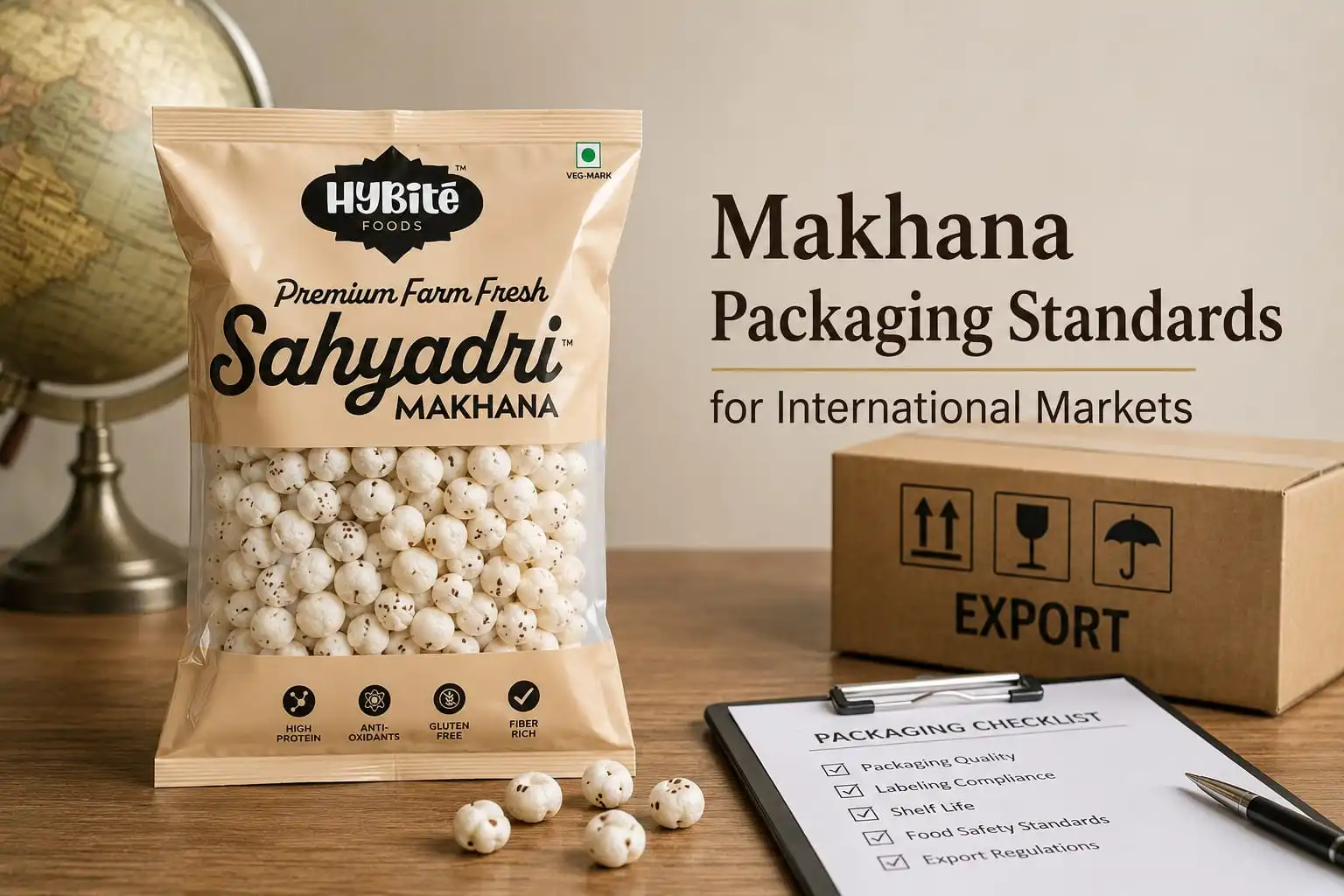
Makhana packaging for international markets must protect product freshness, comply with food safety regulations, meet country-specific labeling requirements, and withstand long-distance transportation. Most importers and retailers prefer food-grade, moisture-resistant, properly labeled packaging that ensures product quality throughout the supply chain.
For exporters, packaging is not just about appearance—it directly affects product safety, shelf life, customs compliance, customer satisfaction, and brand reputation.
Why Packaging Matters in the Global Makhana Market
As demand for makhana continues to grow across the USA, Europe, the UK, Australia, Canada, and the Middle East, buyers are paying close attention to packaging quality. A product may be excellent, but poor packaging can create problems long before it reaches consumers. Exposure to moisture, improper sealing, damaged pouches, or incomplete labeling can affect product quality and even lead to import compliance issues.
For international buyers, packaging is often the first indicator of product quality and supplier professionalism.
Good packaging helps:
- Preserve freshness
- Extend shelf life
- Protect against moisture
- Improve retail presentation
- Support regulatory compliance
- Strengthen brand image
What Type of Packaging Is Commonly Used for Makhana Exports?
Different markets require different packaging formats depending on the target customer and sales channel.
1. Stand-Up Pouches
Stand-up pouches are one of the most widely used packaging formats in the makhana industry, especially for retail sales. Their modern appearance, practical design, and ability to display products effectively on store shelves make them a preferred choice for brands targeting supermarkets, convenience stores, and online marketplaces.
Benefits of Stand-Up Pouches:
- Attractive shelf appearance
- Lightweight structure
- Lower transportation costs
- Convenient storage and handling
- Suitable for retail display
These pouches help brands create a professional look while maintaining product freshness and portability.
2. Zip-Lock Packaging
As consumers increasingly look for convenience, zip-lock packaging has become a popular choice in premium snack categories. The resealable feature allows customers to open and close the package multiple times without significantly affecting product quality.
Advantages of Zip-Lock Packaging:
- Better freshness after opening
- Reduced product wastage
- Convenient for repeated use
- Improved customer experience
- Premium product positioning
Many health snack brands use zip-lock pouches to enhance both functionality and perceived product value.
3. Bulk Packaging
Bulk packaging is commonly used for wholesale distribution, food service businesses, exporters, and private-label buyers. Unlike retail packs, bulk packaging focuses on efficient transportation, storage, and handling of larger quantities. It helps reduce packaging costs while making inventory management easier for commercial buyers.
Common Bulk Packaging Formats:
- Large food-grade bags
- Multi-kilogram export packs
- Carton-based transportation packaging
- Industrial storage packaging
- Customized bulk supply solutions
Bulk packaging is ideal for distributors, importers, cloud kitchens, food manufacturers, and businesses purchasing makhana in large volumes.
Also Read About: Decoding Makhana Grades For Bulk Buyers
What Information Must Be Included on Makhana Packaging?
Labeling is one of the most important aspects of export packaging. Different countries have different requirements, but most international buyers expect clear product information.
Common Label Requirements
Most export packaging includes:
- Product name
- Ingredient list
- Net weight
- Nutrition information
- Manufacturing date
- Best-before date
- Batch number
- Country of origin
- Manufacturer details
- Storage instructions
Clear labeling improves transparency and helps meet importer requirements.
How Does Packaging Affect Shelf Life?
Shelf life is heavily influenced by packaging quality. Makhana naturally absorbs moisture from the environment, which can affect texture and crispness if packaging is inadequate.
Packaging Features That Support Shelf Life
Effective packaging typically includes:
- Moisture barriers
- Airtight sealing
- Durable pouch structures
- Proper storage instructions
These factors help preserve the product's crunch and freshness for a longer period.
What Packaging Standards Do International Retailers Prefer?
Retailers often have specific requirements before accepting products into their stores.
In many markets, buyers expect packaging that is:
- Professionally designed
- Clearly labeled
- Easy to display
- Tamper-resistant
- Retail-ready
Products that meet these expectations often have a stronger chance of securing shelf space.
Also Read About: How to Choose Quality Makhana: What to Look for on the Label
Common Packaging Mistakes Exporters Should Avoid
Packaging errors can lead to complaints, shipment delays, or damaged products.
1. Weak Sealing
Poor sealing may allow moisture or air to enter the package.
This can lead to:
- Loss of freshness
- Reduced shelf life
- Customer dissatisfaction
2. Incomplete Labeling
Missing information may create compliance issues in certain markets.
Common problems include:
- Missing nutrition information
- Incomplete manufacturer details
- Incorrect product descriptions
3. Poor Moisture Protection
Makhana is highly sensitive to moisture exposure.
Insufficient barrier protection may result in:
- Loss of crispness
- Product quality issues
- Retail complaints
4. Weak Transportation Packaging
Export shipments often travel long distances.
Weak outer packaging can increase the risk of:
- Product breakage
- Damaged cartons
- Inventory losses
5. Ignoring Country-Specific Requirements
Packaging requirements vary by market. Failure to review destination-country regulations may create customs or retail approval issues.
Also Read About: Certifications Required for Exporting Makhana
How to Choose the Right Packaging Partner
Selecting the right supplier is just as important as selecting the right product.
Businesses should look for suppliers that can provide:
- Food-grade packaging
- Custom branding options
- Bulk packaging solutions
- Consistent quality standards
- Export-ready packaging support
A supplier with export experience can help businesses meet market requirements more efficiently.
Conclusion
Packaging is no longer just a protective layer around a product. In international markets, it directly influences product quality, regulatory compliance, shelf life, customer perception, and overall brand success.
For businesses involved in importing, exporting, wholesale distribution, or private-label sales, investing in proper makhana packaging standards is essential. Companies looking for reliable bulk supply and export-ready makhana solutions can also consider Hybite Foods, a trusted supplier serving wholesalers, distributors, importers, retailers, and private-label brands with a focus on quality, consistency, and international market requirements.
You Can Also Read More About: Why Makhana Is Becoming a Superfood in the USA and Europe
FAQs
1. What type of packaging is best for exporting makhana?
Moisture-resistant, food-grade, and properly sealed packaging is generally considered the best option for exporting makhana.
2. Why is packaging important for makhana exports?
Packaging helps maintain freshness, protect against moisture, improve shelf life, and meet import requirements.
3. Does international packaging require nutrition labeling?
Most international markets require nutritional information as part of product labeling.
4. How does packaging affect makhana shelf life?
Good packaging protects against moisture and air exposure, helping preserve freshness and crunch.
5. What packaging do retailers prefer for makhana?
Retailers often prefer professionally designed, clearly labeled, and shelf-ready packaging for makhana.